Steam Cleaner vs Extractor: Which Should You Choose? (November 2026)
Choose a steam cleaner for chemical-free surface cleaning and an extractor for lifting liquid, soil and stains from fabric. The best choice depends on the surface, mess and drying time you can manage.
On this page (9 sections)
- Steam cleaner vs extractor: what is the main difference?
- Which surfaces suit a steam cleaner?
- Which surfaces suit an extractor?
- Which option is better for carpets?
- Which option is better for upholstery?
- Which machine is easier to set up?
- How much drying time should you expect?
- Which product should you choose?
- Steam cleaner vs extractor: what is the final rule?
Choose a steam cleaner for chemical-free surface cleaning and an extractor for lifting liquid, soil and stains from fabric. The steam cleaner vs extractor decision comes down to what you are cleaning, how wet the job can be and whether you need suction.
Steam cleaners turn water into heated vapor to loosen grime on suitable surfaces. A cloth or brush usually finishes the job by wiping away what the heat has softened.
Extractors take another route and apply liquid directly to carpet or fabric. They then use suction to pull dirty liquid back into a separate recovery tank.
The 2 types solve different problems in daily cleaning. A steam cleaner can refresh tile, grout, sealed floors, windows and some fabrics without adding soap.
An extractor is designed for carpets, upholstery, car interiors and pet stains. It helps when dirt has soaked in and needs liquid recovery rather than surface wiping.
Think first about the surface itself and its care label. Heat suits some materials well, while others need a cooler liquid method or no moisture at all.
Think next about the kind of mess you face at home. Grease on a sealed floor calls for vapor, while a spill inside a sofa calls for extraction.
Drying time also shapes the right choice for each room. Steam uses less liquid, while extraction removes dirty water but can leave fabric damp for a while.
Setup matters too, especially for frequent small jobs. A lighter machine may suit quick touch-ups, while a larger tank may suit a longer session.
Neither tool covers every task on its own. Many homes get best results by matching the method to the surface, the stain and the time available.
In short, start with the mess and end with the machine. That order keeps cleaning safer for surfaces and more useful for you.

Steam cleaner vs extractor: what is the main difference?
A steam cleaner loosens dirt with heat, while an extractor removes soil with liquid and suction. Neither machine is automatically better for every room or material.
Steam cleaning uses a small amount of water converted into vapor. The vapor can soften grease and grime, and cloths or brushes can help lift loosened soil.
That heat based approach works well on hard surfaces and in tight detail areas. It can also refresh some fabrics, but the fabric care code must allow heat and moisture.
Extraction uses separate clean and dirty water paths. The machine applies liquid to a surface, then suction pulls water and suspended soil into a recovery tank.
This liquid method suits carpet fibers and upholstery where dirt sits below the surface. It also helps with pet stains and spills that need dirty water removed from the material.
That difference affects drying, setup and mess control in clear ways. Steam cleaning may suit hard surfaces and detail work, while extraction is more useful when dirt is embedded in carpet fibers or fabric.
Steam work usually calls for short bursts and regular wiping. You keep adding vapor, pause to wipe, and check that the surface is not getting too wet.
Extraction work calls for measured liquid and slow recovery passes. You apply only enough water to lift soil, then let suction do the removal work.
Care after cleaning matters for both methods. Allow good airflow, avoid heavy use while damp, and test an unseen area before a full clean.
The best choice depends on what the surface can take. Heat, liquid, suction and drying time all push the decision in different directions.
Which surfaces suit a steam cleaner?
Choose steam for suitable sealed floors, grout, windows, tile, kitchen surfaces and detail work where you want vapor instead of a wet recovery process. For wall surfaces, see steam cleaner wall guidance.
Always check the care instructions for the surface before applying heat.
The steam cleaner complete buying guide explains the main features to compare, including heat-up time, tank size, controls and accessories.
The Dupray Neat Steam Cleaner for Home reaches up to 275°F and includes 17 accessories. Its surface recommendations include tile, grout, sealed hardwood floors, windows, mirrors, ovens, stovetops, countertops, showers, bathtubs, cloth, pet beds and car detailing.
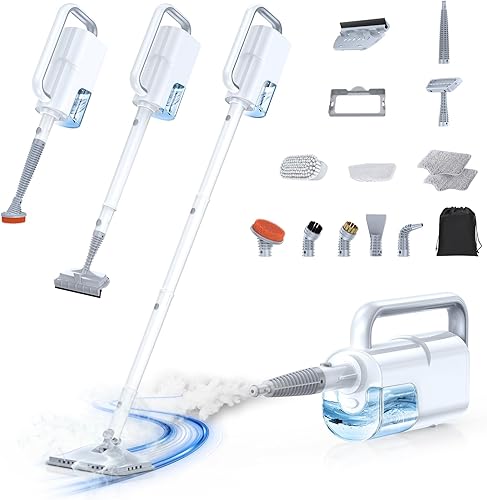
The LABIGO Steam Cleaner heats in 10 seconds and produces 248°F steam. It has a 350 ml tank, 2 steam levels and a detachable handheld design with a carpet glider, window cleaner, brushes and other tools.
Steam can be useful on upholstery only when the fabric allows it. Heat and moisture can affect dyes, adhesives, finishes and delicate fibers, so use low exposure and avoid assuming every sofa or chair is steam-safe.
For a closer fabric comparison, read steam cleaner vs upholstery cleaner before choosing a machine.
Which surfaces suit an extractor?
Choose an extractor for carpet, upholstery, car interiors and pet stains when you need to remove dirty liquid instead of only loosening surface soil. Extraction is especially useful when the mess has worked into fabric or carpet fibers.
The Bissell Commercial BigGreen Commercial BG10 is a large carpet extractor with a 3.5 gallon capacity, 2 large-capacity tanks, a flow indicator and edge-to-edge suction. Its dual motor system and commercial machine format suit broad carpet areas and demanding cleaning sessions.
The Starrybot Upholstery Cleaner Machine is a portable spot extractor with 18,000 Pa suction. It has a 60 oz clean-water tank, a 40 oz dirty-water tank, a 6.5 ft hose, a 3 in hand tool and a 5 in wide tool.
Extraction does not mean the surface becomes dry at once. Use only the amount of liquid needed, make slow recovery passes and provide airflow after cleaning.
Our comparison of carpet cleaner vs steam cleaner explains when liquid extraction makes more sense than vapor cleaning.
Which option is better for carpets?
An extractor is usually better for deep carpet soil and liquid stains, while steam is better for light refreshing or targeted surface work on suitable carpet. Carpet type, backing and care instructions still determine what you can safely use.
The BG10 is the strongest fit here for large carpet areas. Its 42 lb weight and corded design make it less convenient to carry around for a single spot, but the 3.5 gallon capacity reduces refill interruptions during broader work.
The Starrybot is easier to move for one stain, a small rug or a car interior. Its 10.4 lb portable design and 6.5 ft hose help with focused jobs, while the separate clean and dirty tanks keep recovered water away from the fresh supply.
A steam cleaner can help loosen soil on some carpet surfaces, but it does not replace the dirty-water recovery step. For carpet compatibility, see steam cleaners on carpets.
If a stain needs liquid removal, choose an extractor and plan for drying time.
Which option is better for upholstery?
A steam cleaner suits upholstery that is approved for steam and needs gentle surface refreshing, while an extractor suits removable soil, spills and pet stains that need liquid recovery. The fabric code should guide the decision before the machine does.
Steam gives you a way to work with short bursts and a cloth or brush. The Dupray includes a triangle tool, microfiber bonnet, microfiber cloth, microfiber pads, nylon brushes and a brass brush, giving it more detail-oriented options.
The LABIGO includes a garment cloth, window cleaner cloth, washable microfiber pads, brushes, a scraper tool and a handheld pod. That setup suits quick changes between floor, window, fabric and detail tasks.
An extractor is the better match when the problem is liquid-borne soil inside fabric. The Starrybot's 3 in and 5 in tools let you match the cleaning head to a narrow stain or a wider patch.
Read how to use a steam cleaner on upholstery before using heat on a sofa, chair or car seat.
Which machine is easier to set up?
The LABIGO starts fastest, the Dupray offers the longest stated steam run time, and the portable Starrybot is easier to carry for small extraction jobs. Setup convenience depends on whether you value heat-up speed, fewer refills or lower carrying weight.
The LABIGO reaches operating temperature in 10 seconds, but its 350 ml tank provides up to 12 to 15 minutes of continuous cleaning per fill. That makes it useful for quick jobs where you want to start immediately.
The Dupray takes 8 minutes to heat and has a 54 fl oz tank. It offers up to 50 minutes of continuous steam per fill, so it is better suited to longer steam sessions once it is ready.
The Starrybot weighs 10.4 lb and has a detachable handle. Its 60 oz clean-water tank and 40 oz dirty-water tank support spot extraction without the larger footprint of the 42 lb BG10.
Use the machine's own instructions for filling, heat-up, emptying and storage. Do not add chemical cleaners to the LABIGO because its product information warns that they may block the steam nozzle.
How much drying time should you expect?
Steam cleaning usually limits liquid use, but extraction gives better dirty-water recovery and still needs drying time. Air movement, fabric thickness and the amount of water applied can change the result.
Avoid judging dryness by the surface feel alone. Carpet backing and upholstery padding can hold moisture below the surface even when the top feels almost dry.
After steam cleaning, wipe loosened soil with the correct cloth and allow the area to air out. After extraction, make additional suction passes without adding more water, then improve ventilation.
Keep people and pets away from damp fabric until it is fully dry. If an odor or discoloration develops, stop and follow the surface manufacturer's care advice.
Which product should you choose?
Pick the Dupray Neat for broad steam cleaning, the LABIGO for fast floor touch-ups, the Bissell BG10 for large carpet areas and the Starrybot for portable spot extraction. The right choice depends more on the cleaning method than on one headline feature.
Choose the Dupray when you want a 275°F steam cleaner with a 54 fl oz tank, 17 accessories and up to 50 minutes of continuous steam per fill.
Choose the LABIGO when you want a 10-second heat-up, 248°F steam, a detachable handheld design and 2 steam levels for short sessions.
Choose the Bissell BG10 when carpet extraction is the main task and you can manage a 42 lb commercial machine with a 3.5 gallon capacity.
Choose the Starrybot when you need portable extraction for pet stains, upholstery, car interiors or small carpet areas. Its 18,000 Pa suction and separate water tanks fit focused cleaning better than whole-room work.
If you are still comparing cleaning tools, How To Choose A Vacuum Cleaner? covers suction, floor type, attachments and daily use. For machines that combine vacuuming and steam functions, see How To Use A Steam Vacuum Cleaner?.
Steam cleaner vs extractor: what is the final rule?
Choose vapor when you need heat-based surface cleaning, and choose extraction when you need to remove dirty liquid from carpet or fabric. A steam cleaner and an extractor can complement each other, but they are not interchangeable.
For hard surfaces and detail work, start with a steam cleaner that matches the surface and has the accessories you will use. Check sealed floors, grout, tile and windows against the care advice before you begin.
For carpet stains, upholstery soil and pet messes, choose an extractor with suitable tanks, tools and recovery suction. Separate clean and dirty tanks help keep recovered soil away from fresh water.
Match the tool size to the job at hand. A portable extractor suits a single stain or car seat, while a larger machine suits broad carpet areas.
Plan for drying time either way. Use less liquid, improve airflow and keep the area free from use until it feels fully dry.
Test first, clean in small sections and stop if color or texture changes. That simple routine protects floors, fabrics and finishes.
Use this final rule as your guide each time. Vapor for surface grime, extraction for liquid soil, and care first for the surface itself.
Frequently asked questions
Is a steam cleaner better than an extractor?
A steam cleaner is better for chemical-free surface cleaning, grout, sealed floors and detail work, while an extractor is better for removing liquid, soil and stains from carpets or upholstery. Steam loosens grime with heat, but an extractor sprays water or solution and pulls the dirty liquid back into a separate tank.
Can a steam cleaner replace a carpet extractor?
A steam cleaner usually cannot replace a carpet extractor for deep liquid extraction. Steam can refresh and loosen surface soil, but an extractor is built to apply liquid and recover it with suction.
For broad carpet cleaning, the Bissell BG10 is the more suitable type because it has 2 large-capacity tanks and edge-to-edge suction.
Which dries faster, steam cleaning or extraction?
Steam cleaning often leaves less liquid behind than extraction, but drying depends on the surface, steam amount, ventilation and cleaning method. An extractor removes dirty water with suction, yet carpets and upholstery can remain damp.
Use measured passes and allow the surface to dry fully before regular use.
Can you use a steam cleaner on upholstery?
You can use steam on some upholstery, but check the fabric care code and test an unseen area first. Use short bursts, avoid soaking the fabric and improve airflow afterward.
Our guide explains how to use a steam cleaner on upholstery safely and carefully.
What is the best choice for pet stains?
An extractor is usually the better choice for pet stains because it can apply water and recover dirty liquid from carpet or upholstery. The portable Starrybot has 18,000 Pa suction, a 60 oz clean-water tank, a 40 oz dirty-water tank and tools for small stained areas.