Dust Mop vs Broom: Which Should You Use? (November 2026)
Pick a dust mop for fine dust and daily upkeep, and a broom for loose debris you need to collect. In this dust mop vs broom comparison, the debris you face each day matters more than having a single tool for every mess.
On this page (11 sections)
- Dust mop vs broom: which picks up fine dust better?
- Which tool handles loose debris and crumbs?
- How do they compare for pet hair?
- Which is easier on hardwood and other hard floors?
- Which tool reaches under furniture and along baseboards?
- How do dust mops and brooms differ in storage?
- What upkeep does each tool need?
- When should you pair a dust mop with a wet mop?
- Is a vacuum still better than both tools?
- Which should you buy for your home?
- Final verdict on dust mop vs broom
Pick a dust mop for fine dust and daily upkeep, and a broom for loose debris you need to collect. This dust mop vs broom comparison looks at pickup, reach, storage and care, so you can match the tool to your floors.
A dust mop vs broom choice comes down to what you sweep most often. Fine dust and hair favor microfiber, while crumbs and litter favor bristles and a dustpan.

Dust mop vs broom: which picks up fine dust better?
A dust mop wins for fine dust because microfiber traps particles instead of pushing them. A broom moves fine dust into a pile, but some dust can lift and resettle.
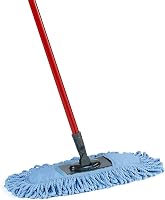
The O-Cedar Dual-Action Microfiber Sweeper Dust Mop uses microfiber and ultra-dense chenille to pick up and trap dust, dirt and hair. For another microfiber floor-cleaning system, see whether Swiffer is a microfiber mop.
O-Cedar says traditional cotton mops push and drag dirt around, while this head aims to hold it.
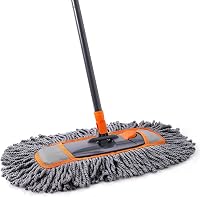
The CLEANHOME Microfiber Dust Mop for Hardwood Floor also uses microfiber to capture dust, dirt and pet hair. Its pad is washable, so trapped debris can be removed between uses.
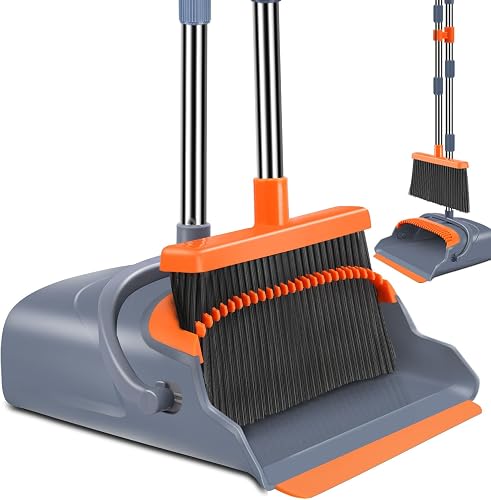
Brooms use bristles to gather loose material. The kelamayi sets use four-row PET bristles, which are dense and durable for sweeping debris toward a dustpan.
That design is strong for visible piles, but fine dust can escape as you sweep.
If your daily problem is a thin layer of dust, a dust mop is the more direct tool. If the problem is crumbs, litter or grit, a broom gives you a pile you can collect.
Which tool handles loose debris and crumbs?
A broom wins for loose debris because bristles gather material into a pile for a dustpan. A dust mop can trap small debris, but it is not built to collect large amounts.
The kelamayi Upgrade Broom and Dustpan Set has a dustpan with a flat rubber lip that sits flush with the floor. Built-in teeth act as a comb to clean pet hair and human hair from the bristles.
The kelamayi Broom and Dustpan Set for Home uses the same four-row bristle design and angled head. The angled head helps you sweep corners and edges, where crumbs often collect.
Dust mops shine when debris is light and frequent. They can pick up crumbs during a quick pass, but a broom clears a larger area faster when the debris is chunky or spread out.
Think about your kitchen and entryway first. Food crumbs, tracked-in grit and pet litter are broom jobs.
A dust mop can follow up and remove the fine residue left behind. For a broader look at mops, this dust mop vs broom split helps you decide what to keep in each room.
How do they compare for pet hair?
A dust mop is better for routine pet hair, while a broom is better for gathering a large amount at once. Pet hair often sheds a little every day, then builds into clumps you can see.
Microfiber dust mop heads trap hair as they pass over the floor. That makes them useful for daily passes in rooms where pets rest, eat or travel through.
A broom gathers hair into a pile, which is useful when hair has collected under furniture or along baseboards. The kelamayi dustpan teeth help pull hair from the bristles, so you spend less time picking it out by hand.
You do not have to choose only one approach. Use a dust mop for frequent light shedding, and use a broom when hair has formed a mat or pile.
Our guide to the best dry dust mop can help if daily pet hair is your main concern.
Which is easier on hardwood and other hard floors?
A microfiber dust mop is gentler for daily use on hardwood because it traps dust without dragging grit. For damp-cleaning steps, see how to mop hardwood floors.
A broom can drag grit across the surface if you sweep too hard.
The O-Cedar dust mop is made for hardwood and other hard surfaces, including tile, laminate, vinyl and marble. Its flexible head also sweeps baseboards in the same motion.
The CLEANHOME dust mop lists hardwood, tile, laminate, marble, vinyl, wood, ceramic, stone, linoleum and cement as surface recommendations. The slim head helps under furniture and in tight spaces.
The kelamayi broom sets use PET bristles that are made for various surfaces and do not hurt wooden floors. Still, bristles can push grit ahead of them, so a dust mop may be safer for a quick daily pass.
For hardwood specifically, our best dust mop for hardwood floors guide breaks down head shape, pad care and reach. A dust mop also avoids the moisture that comes with wet cleaning, which matters for wood finishes.
Which tool reaches under furniture and along baseboards?
A dust mop usually reaches farther because its flat head slides under low furniture. A broom has an angled head, but bristles still need room to move debris out.
The CLEANHOME dust mop has a slim design for under furniture and tight spaces. Its handle adjusts up to 59 inches, so you can clean without bending over.
The O-Cedar dust mop has a flexible head that sweeps floors and baseboards in one motion. That helps along walls, where dust often collects in a thin line.
The kelamayi broom sets have extendable poles from 38.18 to 50.39 inches. You can stand upright while sweeping, and the angled head helps in corners and along edges.
Reach also depends on the shape of your furniture. A flat dust mop head fits under a sofa or bed more easily than a broom head.
For walls and high edges, our best dust mop for walls guide covers tools made for vertical surfaces.
How do dust mops and brooms differ in storage?
A broom and dustpan set stores upright as one unit, while a dust mop stores as a long handle with a flat head. Both can fit in a closet, but the broom set takes less floor space.
The kelamayi sets have a clip-on feature that lets the broom and dustpan stand upright together. That keeps the set compact and prevents the dustpan from sitting separately on the floor.
The O-Cedar dust mop comes with a 3-piece handle, so you can take it apart for storage. The CLEANHOME model has an adjustable handle up to 59 inches, which may need a tall closet if you keep it fully extended.
Before you buy, measure your storage space. A 59-inch handle needs a tall door or utility area.
A broom set that stands upright at about 50 inches may fit more easily in a standard closet.
Also think about where you will use it most. A dust mop stored near bedrooms may get used more often.
A broom stored in the kitchen or garage may be more convenient for quick debris cleanup.
What upkeep does each tool need?
A dust mop needs pad washing and replacement, while a broom needs bristle cleaning and dustpan care. Neither tool is upkeep-free, but the work is different.
Microfiber dust mop pads trap dust and hair, so they need to be shaken out or washed on a regular schedule. O-Cedar says to replace refills every 3 to 6 months for best results.
The O-Cedar set includes 1 microfiber mop and 1 refill, so you can rotate them while one is being washed.
CLEANHOME says its microfiber pad is washable and reusable, with replacement pads available. Washing restores the pad's ability to trap fine particles, which is the main reason to buy a dust mop.
Broom upkeep is simpler in some ways. You can pull hair from the bristles, rinse the dustpan if needed, and check that the handle stays tight.
The kelamayi dustpan teeth are designed to clean the bristles with one pull, which helps with pet hair.
If you prefer less laundry, a broom may feel easier. If you prefer less sweeping of fine dust, a dust mop is worth the pad care.
When should you pair a dust mop with a wet mop?
Use a dust mop for dry dust, then add a wet mop when the floor needs actual washing. Dry dust left on the floor can turn into mud when you mop, so removing it first helps.
This is where a dust mop vs wet mop decision matters. A dust mop removes loose particles, while a wet mop handles sticky residue and stains.
Our dust mop vs wet mop guide explains the order and the right tool for each job.
A broom can also remove loose debris before mopping. The difference is that a dust mop traps fine dust that a broom may scatter.
For a fast weekly clean, a dust mop pass followed by mopping can leave hard floors cleaner than mopping alone.
Be careful with hardwood. Use a dust mop for most daily cleaning, and use only the amount of moisture your floor finish allows.
If you use a spray mop, our note on how to refill bona spray mop can help you manage it safely.
Is a vacuum still better than both tools?
A vacuum can do more than either tool, but it is not always the fastest choice for a quick pass. Dust mops and brooms are lighter and easier to grab for small jobs.
If you are asking is vacuum cleaner better than broom, the answer depends on the debris and the room. A vacuum handles carpets and upholstery, while a dust mop or broom is made for hard floors.
For hard floors, a dust mop is often faster than setting up a vacuum for a thin layer of dust. A broom is faster for gathering crumbs into a dustpan.
A vacuum makes sense when you need deeper cleaning or when debris has worked into a rug.
Many homes keep all three tools. A dust mop handles daily hard-floor upkeep, a broom handles visible debris, and a vacuum handles carpets and larger cleaning sessions.
Which should you buy for your home?
Buy a dust mop if fine dust and pet hair are your daily issue, and buy a broom set if loose debris is your main problem. The best choice is the tool you will use most often.
The O-Cedar Dual-Action Microfiber Sweeper Dust Mop fits homes where fine dust on hard floors is the priority. The CLEANHOME Microfiber Dust Mop for Hardwood Floor fits similar needs with a longer handle and slim head.
The kelamayi Upgrade Broom and Dustpan Set fits pet owners who need to gather hair and debris. The kelamayi Broom and Dustpan Set for Home fits simple indoor and outdoor sweeping with an angled head.
If you want a broom handle for other jobs, our guide on how to unclog a vacuum cleaner hose with a broom handle shows a practical use beyond sweeping. That does not change the main choice, but it shows why a broom stays useful in many homes.
Final verdict on dust mop vs broom
Choose a dust mop for fine dust and daily hard-floor care, and choose a broom for loose debris and quick pile-ups. This dust mop vs broom decision is simple once you name your main mess.
Pick the O-Cedar or CLEANHOME dust mop when dust, hair and fine dirt are the problem. Pick a kelamayi broom and dustpan set when crumbs, litter and larger debris need to be collected.
Many readers will end up with both, and that is fine. A dust mop for daily upkeep plus a broom for visible debris covers most hard-floor cleaning without overcomplicating your routine.
Frequently asked questions
Is a dust mop or a broom better for daily cleaning?
A dust mop is better for daily cleaning when fine dust and hair are the main issue, because microfiber traps particles. A broom is better when crumbs, litter and larger debris need to be gathered into a pile for a dustpan.
Can a dust mop replace a broom?
A dust mop can replace a broom for routine fine dust on hard floors, but it cannot collect large debris as efficiently. Keep a broom for spills, crumbs and outdoor sweeping, and use a dust mop for daily upkeep.
Which is better for pet hair?
A dust mop traps loose pet hair during daily passes, while a broom gathers larger amounts into a pile. Many homes use a dust mop often and a broom when hair and debris build up in one area.
Do dust mops work on hardwood floors?
Microfiber dust mops are made for hard floors such as hardwood, tile, laminate and vinyl. Check the pad care instructions for your floor, and avoid a wet mop on hardwood unless the floor finish allows it.