How to Use a Steam Cleaner in the Bathroom
To use a steam cleaner in the bathroom, clear loose items, fill with water, heat the unit, and move slowly over tile, grout, and fixtures while keeping steam away from sensitive surfaces. Work top to bottom, ventilate the room, and dry surfaces after steaming.
On this page (10 sections)
- How to use a steam cleaner in the bathroom step by step
- What should you prepare before you start steaming?
- Are steam cleaners good for bathrooms and which surfaces suit steam?
- How do you clean bathroom tile and grout with steam?
- Is a steam cleaner good for grout and how long should you spend on each line?
- How do you use a steam mop on a bathroom floor safely?
- How do you steam a shower, tub, and toilet area without damage?
- Can a portable carpet cleaner help with bathroom rugs and mats?
- What attachments work best for bathroom steam cleaning?
- How do you finish, dry, and care for your steam cleaner?
To use a steam cleaner in the bathroom, fill the tank, let it heat, and guide steam slowly across tile, grout, and hard floors in short passes. Ventilate the room, keep the cord dry, and wipe away loosened grime as you go.
Start with dry surfaces and remove bath mats, towels, toiletries, and loose items from the floor. This gives you room to work and stops steam from soaking fabrics you do not want to clean.
Read your manual before you begin. It tells you the right water level, heat time, attachments, and surfaces for your model.
How to use a steam cleaner in the bathroom step by step
Use a simple order: prep, fill, heat, steam, wipe, and dry. That order keeps you safe and helps each pass do more work.
Fill the tank only with the water type your manual allows. Many models ask for tap water, while others suggest distilled water to cut mineral buildup.
Plug the unit in where the cord stays away from water. Let it heat fully before you touch the trigger or start a mop head.
Hold the attachment a few inches from the surface unless your manual says to touch it. Move in slow, overlapping strokes instead of blasting one spot.
Wipe loosened dirt with a clean cloth right after each section. Steam loosens grime, but the cloth removes it.
What should you prepare before you start steaming?
Clear the room, open a window or run the fan, and lay out cloths and a brush. A clean workspace makes the whole job faster.
Move small items to another room or a shelf outside the steam path. Keep paper products, makeup, and electronics away from moisture.
Put on gloves if you want more grip and warmth protection. Steam is hot, and a dry cloth helps you handle a warm surface.
Check for loose grout, cracked tiles, peeling caulk, or stained finishes before you start. Steam can lift weak material, so note problem areas and use less pressure there.
Set a trash bag or laundry basket nearby for used cloths and pads. That keeps dirty items off clean floors.
Are steam cleaners good for bathrooms and which surfaces suit steam?
Yes, steam cleaners are good for many bathroom tasks when you match the tool to the surface. Tile, grout, porcelain, and sealed hard floors usually suit steam well.
Porcelain sinks, tubs, and toilet exteriors can take short steam passes to loosen soap film. Wipe right away so mineral spots do not form as water dries.
Sealed tile floors suit a steam mop, while walls may need a handheld unit with a brush. A best handheld steam cleaner for bathroom style tool gives you more control around faucets and edges.
Avoid steam on unsealed wood, waxed floors, soft stone, and painted surfaces that may bubble or peel. Test a small hidden area first and stop if color changes.
Mirrors and glass need brief passes only. Hold steam away from edges and seals, then buff dry at once.
How do you clean bathroom tile and grout with steam?
Use a brush attachment on grout and slow passes on tile, then wipe each section. Grout lines hold soil, so a brush does the work that vapor alone may miss.
Start at the top of the wall or shower and work down. Dirt that loosens will rinse or wipe away instead of running over clean areas.
Keep the nozzle moving to spread heat evenly. Long, slow strokes work better than a hard blast in one place.
For shower grout, our guide on the best steam cleaner for tile and grout explains attachment choices in more detail. A stiff brush helps on rough grout, while a softer brush suits smooth tile.
When buildup is heavy, steam a small section, scrub lightly, and wipe. Repeat in small zones rather than trying to fix the whole shower at once.
Is a steam cleaner good for grout and how long should you spend on each line?
Yes, a steam cleaner is good for grout when you pair vapor with a brush and wipe the soil away. Heat loosens the film, and the brush lifts it from the lines.
Hold the brush at a light angle so bristles reach into the joint. Use short back and forth strokes and keep the tip moving.
Spend a few seconds per foot of grout on routine cleaning, and a little longer on shower lines with soap buildup. Rushing can leave film behind.
Wipe with a clean microfiber cloth right after each pass. Change cloths when they get loaded with dirt.
If grout looks stained after steaming, the stain may sit deep in the material. Steam cleans the surface, but it does not promise to remove every old stain.
Our post on is a steam cleaner good for grout covers limits and best attachments. It also helps you judge when scrubbing or regrouting may be a better next step.
How do you use a steam mop on a bathroom floor safely?
Use low to medium steam on sealed floors, keep the head moving, and dry the floor after you finish. Sealed tile and stone usually handle a steam mop well.
Sweep or vacuum loose hair and grit first. Grit can scratch a floor when a damp pad drags across it.
Attach a clean pad, fill the tank, and let the unit heat. Start along the far wall and work toward the door so you do not walk on wet tile.
Keep the mop head moving at a steady pace. Slow passes clean better, but standing still can leave excess moisture.
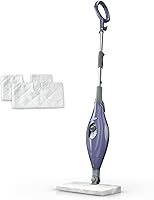
The Shark model below suits small bathroom floors because it is light and steers around fixtures. It includes two washable double-sided pads, so you can flip to the other side instead of stopping to rinse.
How do you steam a shower, tub, and toilet area without damage?
Use short passes, a brush for corners, and quick wipes on chrome and glass. Those rules protect finishes while you clean soap film and grime.
Start with the shower walls, then the floor of the tub or shower, then fixtures. Work from clean areas toward the dirtiest zones.
Keep steam off loose caulk at first, then use a soft brush around edges if the caulk is firm. Replace caulk that feels soft or lifts.
For the toilet, steam the exterior, base, and seat hinges only. Do not use a floor mop head on the toilet, and keep toilet brushes separate from shower tools.
A handheld unit helps in tight corners behind faucets and around shower edges. The best steam cleaner for bathroom guide can help you compare size and attachments for small spaces.
Do not mix steam cleaning with chemical cleaners in the same step. Rinse soap or cleaner residue first, then steam, then wipe.
Can a portable carpet cleaner help with bathroom rugs and mats?
Yes, a portable carpet cleaner can help with bath mats and washable rugs after you steam hard surfaces. Steam suits hard floors, while spray, scrub, and suction suit fabric.
The BISSELL model below has a 48 oz clean water tank, a 3 inch Tough Stain Tool, and a HydroRinse Self-Cleaning Tool. That mix suits small mats that need a deeper clean than a rinse in the sink.
Use it on mats outside the tub area, then let them dry fully before you put them back. Steam mats only if the care label allows heat and moisture.
It also works on upholstered stools, car seats, and stairs, according to BISSELL. That makes it a useful add-on for homes with pets, though it is not a steam cleaner itself.
Compare it with steam options in Which Is Better a Carpet Cleaner or a Steam Cleaner for Pet Stains? if rugs hold most of the mess.
What attachments work best for bathroom steam cleaning?
Use a brush for grout and corners, a cloth or pad for floors, and a squeegee style wipe for glass. The right attachment matters more than high heat.
A round brush fits faucets, drain edges, and toilet bolts. A narrow brush reaches grout lines and baseboard corners.
A microfiber pad spreads steam on floors and picks up loosened soil. Flip or swap pads when they look dirty so you do not spread film.
For shower walls, use a brush first and a cloth second. The brush breaks up soap film, and the cloth carries it away.
Our guide to best steam cleaner for bathroom grout lists tools that suit shower lines and tub edges. It can help you pick a brush shape that fits your tile size.
If you want a broader view of steam tools, How To Use A Steam Vacuum Cleaner? explains how steam units differ from vacuum models. That helps you avoid using the wrong head on bathroom floors.
How do you finish, dry, and care for your steam cleaner?
Wipe surfaces dry, wash pads, empty the tank as directed, and store the unit upright. A dry finish stops water spots and keeps floors from staying slippery.
Use a clean dry cloth on tile, glass, and fixtures after steaming. That last wipe removes loose soil and leaves a clear shine.
Wash mop pads after each use and let them dry fully. The Shark pads above are machine washable, and the BISSELL PowerFresh pads are washable too.
Empty, rinse, or store the tank only as your manual directs. Some models need the tank left empty, while others need a specific storage step.
Check cords, heads, and brushes for cracks or buildup. Replace worn pads and brushes before they stop cleaning well.
For a full routine, use how to use a steam cleaner in the bathroom as your checklist each time. Prep first, steam in zones, wipe as you go, and add a portable fabric clean for mats when needed.
Frequently asked questions
Are steam cleaners good for bathrooms?
Yes, steam cleaners suit many bathroom surfaces because hot vapor loosens soap film, grime, and buildup on tile, grout, and sealed floors. Check each surface first, keep steam moving, and avoid delicate finishes, unsealed stone, and heat-sensitive materials.
Can I use a steam cleaner on bathroom grout?
Yes, grout usually handles steam well when you use a brush attachment and keep the nozzle moving. Work in short passes and rinse or wipe loosened dirt away so it does not settle back into the lines.
What should I avoid steaming in a bathroom?
Avoid unsealed wood, waxed floors, delicate stone, peeling paint, and fixtures with loose or heat-sensitive coatings. Test a hidden spot first and follow your cleaner instructions for temperature and attachments.