Can Steam Mops Be Used on Vinyl Floors?
Yes, can steam mops be used on vinyl floors? Sometimes, but only when the vinyl maker allows steam and you use the lowest setting. Check your floor care sheet first, test in a hidden spot, and keep steam moving so heat and moisture do not build up in seams.
On this page (10 sections)
- Can steam mops be used on vinyl floors safely?
- What types of vinyl floors allow steam?
- How does steam damage vinyl floors?
- Which steam mop setting is safest for vinyl?
- Can you steam clean seams and edges?
- How often can you steam clean vinyl floors?
- Which steam mops suit vinyl floors that allow steam?
- When should you skip steam and use a damp mop?
- How do vinyl, LVP, and sheet vinyl rules differ?
- What is the safest way to steam clean vinyl floors?
Yes, can steam mops be used on vinyl floors? Sometimes, but only when your floor maker allows steam and you use low heat with constant motion.
Steam can clean sealed vinyl well, yet the same heat and moisture can harm seams, glue, and backing on the wrong type.
Can steam mops be used on vinyl floors safely?
Yes, but only for vinyl types whose maker states steam is allowed.
Those types usually have a sealed, heat-stable wear layer and seams rated for steam use.
Check the care sheet for your exact product before you plug in a mop. Floor approval matters more than the mop model, as with many steam cleaners.
Sheet vinyl, vinyl tile, and LVP are not the same build. Sheet vinyl often has felt or fiberglass backing, while LVP has a rigid core.
If the care sheet is silent, treat that as a no. A general hard-floor claim does not override a floor-specific warning.
What types of vinyl floors allow steam?
Vinyl floors that allow steam are the ones whose maker says so in plain words. Look for phrases like steam cleaning allowed, low steam only, or approved for steam mops.
Some high-end LVP and vinyl tile products allow low steam because the wear layer and core can handle brief heat. Others forbid it because the decorative layer can change color or the adhesive can soften.
Glue-down vinyl tile needs extra care. Steam can warm the adhesive through a thin tile, especially at edges and seams.
Click-lock LVP can also take in moisture at joints if steam sits in one spot.
Ask the seller for the care sheet if you lost the papers, and give them the exact product name.
How does steam damage vinyl floors?
Steam damages vinyl through heat, trapped moisture, and pressure at seams. Heat can soften the wear layer, moisture can swell backing, and pressure can force water into joints.
You may not see damage right away. A gloss change, a faint curl at an edge, or a seam that starts to show can appear after the floor cools.
That delay is why a quick test can still miss slow harm.
Padding and subfloor matter too. Steam that passes through a worn wear layer can reach backing fibers.
Once moisture is under the surface, drying can be slow and the floor can stay flat-looking while the bond weakens.
This is also why laminate needs its own check. Laminate and vinyl fail in different ways, so do not borrow a rule from one for the other.
Which steam mop setting is safest for vinyl?
The safest setting is the lowest steam level, used with slow, steady motion. Lower steam means less heat transfer and less water in the pad at once.
Keep the mop moving at a walking pace. Linger only if the maker allows it, and never park a hot mop on one spot while you move furniture or answer the door.
Change or flip the pad when it gets damp. A soaked pad holds water against the floor and behaves more like wet mopping than steam cleaning.
Dry pads also grip better and pick up grit before it scratches.
For many homes, a best steam mop for hard floors is useful because it offers low settings and washable pads. Still, the floor approval comes first and the mop choice comes second.
How do you test steam in a hidden spot?
Pick a spot under a rug, behind a door, or in a closet corner. Use the lowest setting and make three slow passes over a small area.
Wait a full day before you judge the spot. Look for gloss change, lifted edges, bubbles, or a seam that feels higher than the rest.
Keep the test area dry after the passes. Extra water from a bucket or a wet shoe can confuse the result and add moisture to the same spot.
Can you steam clean seams and edges?
Avoid direct steam on seams, edges, and transitions unless the maker approves it. Those areas have exposed backing or adhesive, and they are often the first place water enters.
Lift the mop slightly when you cross a seam. That brief lift cuts the heat and pressure at the joint while still cleaning the flat field of the floor.
Dry seams right after you pass them. A clean, dry cloth can pull surface moisture away before it works into the joint.
Do not scrub the seam with a brush to dry it.
Transitions to wood, tile, or carpet often sit on adhesive or metal strips. Steam can loosen the strip or soften the glue under the trim.
Clean those lines with a damp cloth instead of steam.
How often can you steam clean vinyl floors?
Use steam only as often as the floor maker allows, and usually not as a daily habit. Many makers allow occasional low steam, weekly steam, or no steam at all.
Daily soil, pet hair, and kitchen grit are better handled with a vacuum and a damp microfiber mop. That routine keeps grit off the surface without repeated heat cycles.
Steam is most useful for sanitizing after illness or for a deep clean before guests. Even then, keep the setting low and the pad as dry as practical.
If you steam more than the maker allows, you can shorten the life of the wear layer. Heat plus foot traffic can dull the finish faster than soil alone.
Which steam mops suit vinyl floors that allow steam?
A light steam mop with a low setting and washable pads suits steam-approved vinyl best. You want control over heat, not maximum power.
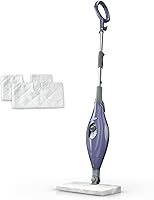
The Shark Steam Pocket Mop S3501 weighs 4.9 lb and starts steaming in 30 seconds. Shark says it is designed for sealed hard floors including vinyl, and it includes two washable double-sided pads.
That flip matters on vinyl because a damp pad can leave too much water on the surface. A lighter mop also helps you keep steady motion instead of pressing down hard.
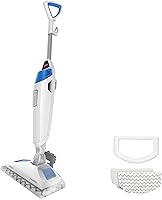
The BISSELL PowerFresh 1940A has three steam settings and a 23 ft cord. BISSELL says it is designed for sealed hard floors like sealed hardwood, tile, ceramic, granite, and marble, and it has a flip-down Easy Scrubber for stuck spots.
Use the lowest of those three settings on vinyl. The scrubber can help on a dried spill, but press with care so the brush does not wear the finish.
The LABIGO Steam Cleaner heats in 10 seconds and has two steam levels. It has a 350 ml tank, a 4 m cord, and a detachable handheld pod with attachments for tile, grout, windows, and other tasks.
Its detachable head can help with grout lines, but keep handheld steam off vinyl seams. Use the handheld part on tile grout or a stove back area, not parked on a vinyl edge.
What should you avoid on vinyl floors?
Avoid high steam, soaked pads, and long pauses on vinyl. Those three habits add the most heat and water to one spot.
Do not add chemical cleaners to the tank unless the mop maker allows it. LABIGO warns that chemical cleaners may block the steam nozzle, and residue can also affect how the pad releases water.
Do not use a steam mop on a floor with loose edges, bubbles, or torn seams. Fix the floor first or use a damp mop until a pro checks the bond.
When should you skip steam and use a damp mop?
Skip steam when the floor maker forbids it, the floor is old, or seams are lifting. A damp microfiber mop cleans most vinyl soil with far less risk.
Use a vacuum or broom first to remove grit. Grit under a damp pad can scratch the wear layer, and grit under steam can also scratch while the surface is warm.
Wring the mop well so it feels damp, not wet. Vinyl does not need standing water to look clean, and less water means less chance of seam damage.
For a broader floor tool, our guide to the best steam cleaner for floors can help you compare models after you confirm steam is allowed. That order protects the floor first.
How do vinyl, LVP, and sheet vinyl rules differ?
Vinyl, LVP, and sheet vinyl rules differ because the core and backing differ. LVP has a rigid core, sheet vinyl often has a flexible backing, and vinyl tile can be glue-down or self-adhesive.
A product that allows low steam on LVP may still forbid steam on sheet vinyl. The reverse can also be true.
The exact product name is the only safe link between the floor and the rule.
If your floor is LVP, read can steam mops be used on lvp before you decide.
Keep a copy of the care sheet with your home files. It stops a guess when a new cleaner or house helper asks what is safe.
What is the safest way to steam clean vinyl floors?
The safest routine is low setting, dry pad, constant motion, and quick seam drying. That routine limits heat and water where vinyl is weakest.
Start by vacuuming or sweeping, then test a hidden spot on the lowest setting. Wait a day, check the finish, and only continue if the spot looks unchanged.
Steam in straight passes and flip or change the pad as it gets damp. Lift the mop at seams, dry the joint with a cloth, and let the floor air dry before you put a rug back down.
If the test shows any change, stop and switch to a damp microfiber mop.
For scale and technique, see Can Car Vacuum Cleaner Be Used At Home? if you are pairing floor care with a vacuum routine in the same room.
Frequently asked questions
Can steam mops be used on vinyl floors?
Only if your vinyl floor maker allows steam in writing. Many sheet vinyl and some LVP products warn against steam because heat can soften the wear layer and moisture can enter seams.
If steam is allowed, use the lowest setting, keep the mop moving, and test in a hidden area first.
Is steam safe for LVP floors?
Some LVP styles allow brief, low steam, while others do not. The vinyl layer, backing, and seam glue decide the answer, not the LVP label alone.
Check the exact product name and care sheet.
For a closer look, see can steam mops be used on lvp.
What steam setting should I use on vinyl?
Use the lowest setting and the least steam that cleans. That setting still creates heat and moisture, so it is not automatically safe.
Keep the mop moving, lift it at corners, and stop if you see curling, gloss change, or bubbling.
Can I use a steam mop on old sheet vinyl?
Older sheet vinyl is often more at risk because the backing, glue, and wear layer may already be weak. Steam can lift edges and loosen seams.
A damp microfiber mop is usually a safer daily choice unless the maker of that floor states steam is safe.