How to Choose a Cordless Steam Mop
A true cordless steam mop must create steam without a wall outlet. Check the power source, runtime, water capacity and sealed-floor guidance first, because a spray mop or heated-water mop is not the same as a steam mop.
On this page (6 sections)
A true cordless steam mop heats water into steam without staying connected to a wall outlet. It relies on a rechargeable battery to power the heater while you move from room to room.
Before choosing one, confirm the power source, runtime, water capacity and sealed-floor guidance. Those details matter because a spray mop or heated-water mop may look similar without producing steam.
A spray mop applies liquid from a bottle or reservoir and relies on the pad to spread it. The liquid may be warm, but the mop does not turn water into steam unless it has a steam system.
A heated-water mop can feel different in use, yet heat alone does not prove that a mop is a steam mop. Look for a stated steam system, a heat-up time and a clear power source before you assume it will sanitize as directed.
For tile floors, also check how the mop handles grout, how much water it carries and whether the floor is sealed. Tile can vary by finish, joints and surrounding materials, so the floor guidance should come before the mop choice.
Runtime deserves the same attention as tank size. A cordless model may be easy to move between rooms, but it still needs enough charge and water for the area you plan to clean.
Our steam cleaner guide explains the wider differences between steam tools and other floor cleaners. That context can help you decide whether steam fits your tile routine at all.
If your main need is a quick wipe for light marks, a simpler mop may do the job. If you want steam, confirm battery power in the product details rather than relying on the word portable.
What makes a cordless steam mop different?
A cordless steam mop uses stored battery power to heat water and produce steam while you clean. A corded steam mop draws power continuously from an outlet, so it does not have the same runtime limit.
That difference affects how you plan to clean. A cordless model may be easier to move between rooms, but you need enough charge and water for the area.
A corded model can keep working as long as it has power and water.
A spray mop uses a bottle or reservoir to apply liquid to the floor. It may be convenient for quick marks, but it does not create steam simply because the liquid is warm or the pad is damp.
A heated-water mop also needs careful checking. Heat alone does not prove that a mop is a steam mop.
Look for a stated steam system, heat-up time and power source.
What should you check before buying a cordless steam mop?
The most important checks are power source, runtime, water capacity, heat-up time, steam control and floor compatibility. These details tell you whether the mop fits your rooms and cleaning habits.
Does it have a battery or a cord?
Start with the power source. A product described as portable or handheld is not automatically cordless, and a detachable pod does not prove that the main mop runs on a battery.
A corded steam mop can still be easy to move if it has a long cord. The Shark Steam Pocket Mop has a long power cord, while the BISSELL PowerFresh has a 23 ft power cord.
Both are corded electric products.
The LABIGO Steam Cleaner also uses a power cord. Its 4-meter cord gives reach, but it is not a cordless steam mop.
If outlet-free cleaning is your main reason for shopping, do not substitute a corded mop just because it has a compact shape or detachable section.
How much runtime do you need?
A cordless steam mop should state how long it runs on a charge. Compare that time with the floors you clean in one session, then allow for pauses, corners and extra passes over grout.
Runtime also depends on steam level and how often the heater runs. A larger room may need a second charge if the battery is small, so charging access matters as much as the headline runtime.
The three products in this guide do not provide a battery runtime because they are corded. That makes them unsuitable when your priority is cleaning without an outlet, even though they may suit buyers who want continuous corded power.
How much water does the tank hold?
Water capacity affects how often you stop to refill. A larger tank can help across several rooms, while a smaller tank may keep the mop lighter.
The Shark holds 15.2 fluid ounces. The BISSELL has a 16 fluid ounce tank.
The LABIGO has a 350 ml tank and states that it can provide 12 to 15 minutes of continuous cleaning per fill.
Do not add chemical cleaners to a steam system unless the instructions allow it. LABIGO warns that chemical cleaners may block the steam nozzle.
How fast does it heat?
Heat-up time tells you how long you wait before steam is ready. The Shark and BISSELL heat in 30 seconds.
The LABIGO heats in 10 seconds and produces steam up to 248°F, according to its product information.
A short heat-up time helps with small spills and quick room changes. It does not tell you how long the mop will run, how evenly it steams or whether it is cordless.
Can you control the steam?
Steam control helps you match output to the surface and the mess. The BISSELL has 3 steam settings, while the LABIGO has 2 steam levels.
The LABIGO describes its low setting for daily cleaning and delicate surfaces and its high setting for deeper cleaning. The BISSELL provides settings for quick refreshes, everyday dirt and stuck-on spills.
The Shark information does not specify multiple steam levels. Its focus is quick startup, swivel steering and dual-sided cleaning pads.
Which product fits your cleaning setup?
These products help show the main buying trade-offs, but none of them is a true cordless steam mop. If you are open to corded models, compare steam mops on sale for more options.
They are corded options for buyers who can use an outlet and want steam cleaning for sealed hard floors or several surfaces.
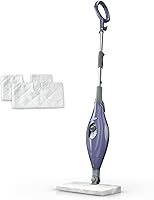
Shark Steam Pocket Mop with 2 Washable
The Shark Steam Pocket Mop suits buyers who want a light corded mop for sealed hard floors and frequent pad flipping. For carpet guidance, see whether a Shark steam mop can be used on carpet.
It weighs 4.9 lb, heats in 30 seconds and has a 15.2 fluid ounce water capacity.
Its dual-sided pads let you flip the mop head and continue cleaning before washing a pad. For disposable-pad compatibility, see steam mops with disposable pads.
The included set has 2 washable double-sided microfiber pads and a filling flask.
Shark describes it for sealed hardwood, marble, tile, stone, laminate and vinyl. That makes it a useful corded alternative for readers comparing a steam mop for tile floors cordless with a standard outlet-powered design.
The swivel steering can help around furniture and in tight spaces. Its long power cord gives a wide cleaning radius, but you still need an outlet during use.
Use the pads as directed and machine wash them between cleaning sessions. If you want a head shape that reaches corners, compare this with our guide to a steam mop with triangle head.
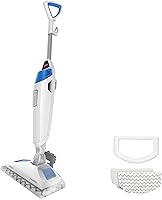
BISSELL Steam Mop 1940A PowerFresh Floor Steam
The BISSELL PowerFresh suits buyers who want adjustable steam and a built-in scrubber for sealed hardwood and tile. See our Bissell PowerFresh 1940 review for more product detail.
It weighs 6.2 lb, heats in 30 seconds and has a 16 fluid ounce removable water tank.
The Easy Scrubber is designed to break up dried-on messes and grout buildup. Its 3 steam settings let you choose a lower or higher output for different cleaning tasks.
BISSELL lists sealed hardwood, tile, ceramic, granite and marble among the suitable surfaces. That makes it a practical choice for tile rooms where you want more control over steam and extra help with dried residue.
The 23 ft cord can reduce outlet changes across a room. It still does not provide cordless operation, so it cannot meet a requirement for battery-powered cleaning.
The removable tank makes sink refills easier between sessions. For more tile-focused comparisons, see our guide to the best steam mop for tile and laminate floors.
LABIGO Steam Cleaner
The LABIGO Steam Cleaner suits buyers who want a corded steam tool that can switch between floor cleaning and handheld tasks. It has a 350 ml tank, 1,200 watts of power, a 10-second heat-up and 2 steam levels.
LABIGO states that the tank supports 12 to 15 minutes of continuous cleaning per fill. Its included components include a carpet glider, handheld pod, mop head, 3 mop extension pipes, washable microfiber pads, a window cleaner with squeegee and several nozzle and brush tools.
The surface recommendations include floor, window, carpet, tile, hardwood, stove, grill, grout, sofa, clothing and car accessories. That wider range makes it more flexible than a floor-only steam mop, but it also gives you more parts to store and manage.
The 2 steam levels let you choose lower output for daily cleaning or higher output for tougher stains. Its auto shut-off stops operation if the tank runs dry after a 30-second beep.
This model has a 4-meter power cord, not a battery. If you want one tool for floors and above-floor cleaning, it is worth comparing with our guide to the best steam mop for hardwood floors and tile.
Is cordless steam better for tile floors?
Cordless steam can be convenient on tile floors when the battery lasts through the room and the water tank is large enough for the job. The main benefit is freedom from outlet changes, especially in kitchens, bathrooms and entryways.
You can start near the door, work across the tile and finish without hunting for a socket behind furniture. That can make a short session feel simpler, particularly when the cord would otherwise cross a wet floor.
The trade-off is that battery power can limit total cleaning time. You may need to charge before a larger session, and a smaller cordless design may require more water refills.
Steam level can also affect how quickly the battery and tank are used. A higher setting may suit dried residue, while a lower setting may be enough for a routine pass over sealed tile.
Tile also needs more than portability. Check the mop's sealed-floor guidance, steam control, pad design and ability to work around grout.
Grout lines can trap dirt even when the tile surface looks clean. A mop head that moves steadily and a pad that holds contact may help, but pressure is not a substitute for the right steam setting.
For more general floor cleaning choices, read our guide to best steam mops for hard floors. That comparison can show whether a corded model may suit your home better.
Do not assume that every tile floor should receive steam. Avoid using steam where the floor manufacturer warns against it, and take extra care around damaged grout, lifted edges or unsealed materials.
A cordless design does not remove those limits. If the tile, grout or surrounding trim cannot take steam, portability will not make the method suitable.
Consider your rooms before you decide. A small bathroom may suit a cordless mop, while a larger kitchen may need more runtime or a longer cord.
How should you use a steam mop on tile?
Start by removing loose grit so the mop pad does not drag dirt across the floor. A quick sweep or vacuum pass can help, since steam works best after dry debris is gone.
Then fill the tank with the water type and amount allowed by the instructions. Do not add chemical cleaners unless the instructions allow it, because some additives can block the steam nozzle.
Allow the mop to reach its stated heat-up time before moving it across the floor. Starting too soon can leave the first pass uneven, with less steam than you expect.
Use a lower steam setting when the surface allows it, and avoid holding steam in one spot. Steady movement spreads the moisture more evenly and gives the floor less time to stay damp.
Move in steady passes and pay attention to grout lines. Tile often needs a little more contact at the joints, where dirt collects after everyday traffic.
A scrubber or suitable brush may help with dried residue, but aggressive pressure can damage some finishes. Let the steam do the work first, then use light extra passes where needed.
Watch the edges of the floor as you go. Moisture should not be left sitting along baseboards, thresholds or lift-prone areas, so wipe up any excess right away.
After cleaning, let the floor dry and remove the pad. A dry floor is easier to check for missed spots around furniture and along grout lines.
Wash reusable microfiber pads according to the care instructions, then store the mop only after it has cooled. Clean pads are part of the routine, since a dirty pad can spread loosened dirt back onto the tile.
Keep the tank, pads and any brushes ready for the next use. A short set-up helps you steam tile when it needs it, without turning a quick task into a longer one.
What should you choose if you need cordless operation?
Choose a model with a clearly stated rechargeable battery, runtime and charging method. Do not treat a long cord, a handheld attachment or a fast heat-up time as proof of cordless operation.
If you can use an outlet, the Shark is the lightest option here and has dual-sided washable pads. Choose the BISSELL if 3 steam settings, a flip-down scrubber and a 23 ft cord matter more.
Choose the LABIGO if you want a detachable handheld tool and multiple attachments.
For another non-steam option on tile, compare a Best Cordless Stick Vacuum For Tile Floors when loose dust and crumbs are the main problem. You can also read What Is the Best Vacuum for Tile Floors? before deciding whether steam is the right second step.
The key rule is simple: pick a true cordless steam mop only when battery power and stated runtime are confirmed. Pick the Shark for light corded floor cleaning, the BISSELL for adjustable steam and scrubbing, or the LABIGO for corded multi-surface work.
Frequently asked questions
What is the best cordless steam mop for tile floors?
The best cordless steam mop for tile floors needs a battery-powered steam system, enough runtime for the room and clear guidance for sealed tile. The products compared here are corded, so they are not true cordless choices.
Check the power source before buying if outlet-free cleaning is essential.
Is a cordless steam mop better than a spray mop?
A cordless steam mop creates steam from heated water, while a spray mop applies cleaning liquid with a pad. Steam can clean using water alone when used as directed, but cordless models may trade longer cleaning time for battery limits, charging time and a smaller water tank.
Can you use a steam mop on tile floors?
You can use a steam mop on tile floors when the surface and grout are suitable and the floor is sealed where the instructions require it. Tile can tolerate steam differently depending on its finish, joints and surrounding materials, so follow the floor and mop care guidance.
How do I know if a steam mop is really cordless?
Check for a battery or rechargeable power source and a stated runtime. A long power cord does not make a mop cordless, and a detachable handheld unit is not cordless if the main machine still needs a wall outlet.