How to Choose a Steam Mop for Tile and Laminate Floors
The best steam mop for tile and laminate floors is one approved for sealed laminate and equipped with suitable steam control. Check the floor maker's care instructions before using steam, then match the mop's controls, tank size and pad system to your cleaning routine.
On this page (8 sections)
- Can you use a steam mop on tile and laminate floors?
- Which steam controls matter for mixed floors?
- Which steam mop features help on tile?
- Which products suit tile and laminate floor households?
- How do the water tanks and cords compare?
- How should you prepare tile and laminate before steaming?
- How should you use and store a steam mop?
- Which steam mop is best for tile and laminate floors?
The best steam mop for tile and laminate floors is approved for your sealed laminate, offers enough steam control for the surface, and lets you clean with a damp pad rather than leaving standing moisture. Tile is usually more tolerant of steam than laminate, but the flooring manufacturer's care instructions decide whether steam belongs in your routine.
A mixed-floor home needs more than high heat. You need a mop that can manage grout and tile soil while giving you control around laminate seams, edges and transitions.
We compared the stated floor guidance, heat-up time, water capacity, controls, pad systems and reach of 3 steam cleaners.
Can you use a steam mop on tile and laminate floors?
You can use a steam mop on both surfaces only when your laminate flooring allows steam and the floors are sealed. **Tile generally gives you more flexibility, while laminate requires closer attention to moisture, seams and finish.
For hardwood, check whether steam mops are safe for your floors.**
Check the care instructions for your specific floor before filling the mop. Some laminate floors are not approved for steam, even when they look sealed.
See our laminate floor mopping guide for care guidance.
If steam is allowed, keep the mop moving and use the lowest setting that handles the soil.
Tile can still need care around grout, damaged glaze, loose sections and unsealed areas. Steam does not repair cracked grout or make an unsealed floor suitable for wet cleaning.
For broader guidance on choosing a steam cleaner, compare the surfaces you clean, how much water you need and whether you want a floor-only tool or a multi-surface appliance.
What should you check before steaming laminate?
Check laminate approval, steam output and moisture control before looking at extra attachments. A mop can be useful on tile but still be a poor match for laminate if the floor maker excludes steam.
Use this pre-cleaning check:
- Confirm that your laminate care instructions allow steam cleaning.
- Look for loose boards, open seams, lifted edges or damaged finish.
- Use a clean microfiber pad.
- Start with the lowest suitable steam setting.
- Keep the mop moving instead of holding it in one place.
- Work in a small area first.
- Stop if the floor remains visibly wet or the finish changes.
- Let the floor dry before placing rugs or furniture back.
Do not add chemical cleaners to a steam mop unless the appliance instructions specifically allow them. The LABIGO information warns that adding chemical cleaners may block its steam nozzle.
Which steam controls matter for mixed floors?
Variable steam control matters most when one home has tile and laminate. A lower setting can help you limit moisture on approved laminate, while a higher setting may be useful for tougher tile soil and grout.
A single-output mop can still work for sealed hard floors, but you have less ability to adjust the amount of steam. A mop with multiple levels gives you a clearer way to change the cleaning approach between rooms.
The BISSELL PowerFresh 1940A has 3 steam settings for quick refreshes, everyday dirt and stuck-on spills. The LABIGO Steam Cleaner has 2 steam levels, with low steam for daily cleaning and delicate surfaces and high steam for deeper cleaning.
The Shark Steam Pocket Mop S3501 does not present multiple steam levels in the supplied product details. Its strength is a simple sealed-hard-floor design, quick heat-up and a dual-sided pad system.
How much steam is too much for laminate?
Too much steam is any amount that leaves moisture sitting on or entering the laminate. **The correct amount depends on the floor maker's instructions, not on the mop's highest heat setting.
Read more about steam mop safety on laminate.**
Steam temperature alone does not tell you whether a floor is suitable. The Shark and BISSELL both list a maximum temperature of 212 °F, while the LABIGO lists 248 °F steam.
Those figures describe heat, not permission to clean every floor.
Use short passes and check the floor as you work. If the pad becomes soaked, the surface looks wet after each pass or moisture gathers near seams, pause and change your method.
Which steam mop features help on tile?
Tile cleaning benefits from a washable pad, a head that can reach around furniture and enough water for the room size. A scrubber can also help with dried soil, but it does not replace regular grout care.
Look for these practical features:
- A reusable pad that can be washed after dirty jobs.
- A mop head that can turn around furniture and into narrow spaces.
- A power cord long enough for your rooms.
- A tank size that matches the area you clean in one session.
- Steam control for light soil and stuck-on messes.
- A head or attachment that can reach tile edges and grout.
The BISSELL includes a flip-down Easy Scrubber for dried-on messes and grout buildup. It also has a 12 in cleaning path, a 23 ft power cord and a removable 16 fl oz water tank.
The Shark has swivel steering, a rectangle mop head and a long power cord. For a worn or damaged head, see our replacement steam mop head guide.
Its 15.2 fl oz capacity and under-5 lb weight suit someone who wants a compact floor tool that is easy to carry between rooms.
The LABIGO includes a mop head, extension pipes, a carpet glider, a handheld pod, a window cleaner with squeegee and other attachments. That flexibility can help if your tile cleaning is part of a larger home-cleaning routine.
If sofa care is part of that routine, compare a steam cleaner with an upholstery cleaner.
For a narrower comparison, see our guide to the best steam mop for hard floors.
Which products suit tile and laminate floor households?
The right choice depends on whether your priority is laminate approval, tile scrubbing, or one tool for several surfaces. These 3 products cover different approaches, and each one should be used only on surfaces approved by the floor maker.
Shark Steam Pocket Mop with 2 Washable
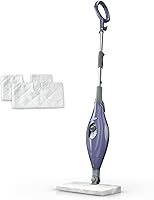
The Shark Steam Pocket Mop S3501 suits a mixed-floor household that wants a lightweight floor mop with named support for sealed laminate and tile. It weighs 4.9 lb, reaches steam in 30 seconds and has a 15.2 fl oz water capacity.
Its dual-sided pads let you flip the mop head and continue cleaning with the other side before washing the pad. For compatibility with disposable options, see Shark disposable mop pads.
That can be useful when tile rooms need more passes than laminate rooms.
Shark names sealed hardwood, marble, tile, stone, laminate and vinyl among the hard floors this mop is designed to clean. That wording is useful for a mixed-floor home, but your laminate care instructions still come first.
The mop has swivel steering for tight spaces and around furniture. Its compact form and 4.9 lb weight make it the easiest of these 3 products to carry between rooms.
The trade-off is simpler steam control. The product details do not give multiple steam levels, so you cannot select from the 2-level or 3-level adjustment found on the other options.
Choose the Shark if your sealed laminate is steam-approved and you want a focused floor mop with low carry weight. Check the guidance in our article on using a Shark steam mop on laminate floors before cleaning.
BISSELL Steam Mop 1940A PowerFresh Floor Steam
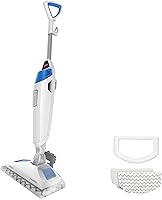
The BISSELL PowerFresh 1940A suits homes that clean sealed tile and sealed hardwood and want more steam adjustment for different messes. It has 3 steam settings, a 16 fl oz removable tank, a 12 in cleaning path and a 23 ft power cord.
Its Easy Scrubber is designed for dried-on messes and grout buildup. That gives tile floors a feature the Shark does not list, especially where soil collects in textured areas or grout lines.
BISSELL names sealed hardwood, tile, ceramic, granite and marble as recommended surfaces. The product details do not name laminate, so a mixed-floor household should confirm laminate approval before using it there.
The removable tank can be refilled at the sink, and the reusable washable microfiber pads support repeated cleaning. The 6.2 lb upright design is heavier than the Shark, but the wider 12 in path can reduce passes across open tile areas.
Choose the BISSELL when sealed tile is the main job and you want a scrubber plus 3 steam settings. For another floor comparison, read our guide to best steam mops for hardwood floors and tile.
LABIGO Steam Cleaner
The LABIGO Steam Cleaner suits buyers who want a detachable handheld tool for floors and other surfaces, with 2 steam levels and a fast 10-second heat-up. Its 350 ml tank is designed for 12 to 15 minutes of continuous cleaning per fill.
Its 10-in-1 design includes floor, carpet, window, sofa, clothing, grill and car-related cleaning uses in the product details. It includes a carpet glider, handheld pod, mop head, 3 mop extension pipes, nylon and metal brushes, nozzles, a window squeegee, washable microfiber pads and other attachments.
The 2-level control gives you a lower and higher steam option. Use the lower level only where the floor maker permits steam and the surface needs less moisture.
The product details name floor, window, carpet, tile, hardwood, stove, grill, grout, sofa, clothing and car-related surfaces. That broad range is useful if you want one appliance beyond floor cleaning, but more attachments also mean more parts to store.
The LABIGO heats in 10 seconds and lists 248 °F steam. Its auto shut-off alerts you with a 30-second beep and stops operation if the tank runs dry.
The 4 m power cord gives reach without making the tool cordless.
Choose the LABIGO if you want floor cleaning plus detachable handheld tasks and a 2-level control. Confirm that your laminate is steam-approved before using the floor attachment.
How do the water tanks and cords compare?
Tank size affects how often you stop to refill, while cord length affects how often you move between outlets. Choose capacity and reach around the largest room you clean in one session.
| Product | Water capacity | Heat-up time | Control or reach |
|---|---|---|---|
| Shark S3501 | 15.2 fl oz | 30 seconds | Long power cord, no multiple levels stated |
| BISSELL 1940A | 16 fl oz | 30 seconds | 3 steam settings, 23 ft cord |
| LABIGO KS-7883 | 350 ml | 10 seconds | 2 steam levels, 4 m cord |
The BISSELL has the largest stated capacity among the 2 floor-focused mops in fluid ounces, while the LABIGO gives its tank size in milliliters and states 12 to 15 minutes of continuous cleaning per fill.
A larger tank does not make a mop better for laminate. If you are cleaning approved laminate, moisture control matters more than extending the session.
A corded mop can still cover a large area when the cord is long enough. The Shark includes an extended-reach cord, the BISSELL lists 23 ft and the LABIGO lists 4 m.
How should you prepare tile and laminate before steaming?
Preparation helps keep grit from turning into wet-floor grime. Vacuum or sweep loose dirt first, then steam with a clean pad and the correct floor setting.
Fine grit can move under a mop pad and scratch some finishes. Use a vacuum suited to the surface, such as a vacuum for laminate floors or a vacuum for tile floors, before adding steam.
Remove loose hair, crumbs and sand from edges and transitions. Check the pad for trapped debris before starting another room.
Fill the tank with the water recommended by the appliance instructions. Do not add cleaning chemicals unless the instructions explicitly allow them.
Attach the pad securely, select the lowest suitable setting and begin in a small area.
On tile, use extra care around cracked grout, loose tile and damaged sealant. On laminate, use short passes and inspect seams and edges as you go.
How should you use and store a steam mop?
Use the mop in controlled passes, then clean and dry the reusable pad before storage. A clean pad and a dry storage routine matter as much as the steam setting.
Follow this general process:
- Clear loose dirt from the floor.
- Confirm that steam is allowed on the surface.
- Fill the tank without adding unapproved chemicals.
- Attach a clean pad.
- Heat the mop according to its instructions.
- Start with the lowest suitable steam level.
- Keep the mop moving in short, even passes.
- Check laminate seams and tile grout as you work.
- Turn off the mop and let it cool before handling attachments.
- Remove, wash and dry the pad before storing it.
The Shark includes 2 washable double-sided microfiber pads. The BISSELL uses reusable washable mop pads.
The LABIGO includes 2 washable microfiber pads plus other cloths and cleaning attachments.
Store the mop and pads where they can dry fully. A damp pad left in a closed storage area can become unpleasant before the next cleaning session.
Which steam mop is best for tile and laminate floors?
The Shark Steam Pocket Mop S3501 is the clearest fit when your sealed laminate allows steam and you want a light floor-focused mop with named laminate support. Its 4.9 lb weight, swivel steering, 30-second heat-up and 2 double-sided washable pads suit regular room-to-room cleaning.
Choose the BISSELL PowerFresh 1940A if sealed tile, grout and dried-on soil are your main concerns. Its Easy Scrubber, 3 steam settings, 12 in cleaning path and 23 ft cord give you more tile-focused control.
Choose the LABIGO Steam Cleaner if you want one tool for floors plus handheld cleaning. Its 2 steam levels, 350 ml tank, 10-second heat-up and detachable handheld design add flexibility, but you must confirm surface approval for each floor.
Before you steam, check the laminate manufacturer's care rules. If your laminate excludes steam, use a low-moisture cleaning method instead and keep the steam mop for approved sealed tile or other compatible surfaces.
Frequently asked questions
What is the best steam mop for tile and laminate floors?
The best steam mop for tile and laminate floors is one that matches the care rules for your sealed laminate and gives you enough control for both surfaces. The Shark S3501 names sealed laminate among its supported hard floors, while the BISSELL 1940A is designed for sealed hardwood and tile.
Always confirm that your laminate flooring allows steam before use.
Can you use a steam mop on laminate floors?
You can use a steam mop on laminate only when the flooring maker allows steam and the surface is sealed for that type of cleaning. Steam can enter seams or damage some finishes.
Use the lowest suitable setting, keep the mop moving and avoid leaving moisture on the floor.
What steam setting is best for laminate floors?
Use the lowest steam setting that cleans the soil when the flooring maker permits steam. Lower output gives you more control over moisture, while higher output may suit tougher soil on approved tile.
The LABIGO has 2 steam levels, and the BISSELL has 3 settings.
Is steam cleaning safe for tile floors?
Steam cleaning can suit sealed tile floors, but grout, surface finish and nearby materials still matter. The Shark is designed for sealed hard floors including tile, and the BISSELL is designed for sealed hardwood, tile, ceramic, granite and marble.
Follow the floor and mop care instructions.
How often should you wash steam mop pads?
Wash steam mop pads after cleaning when they are dirty, then let them dry fully before storage. Reusable pads pick up soil from the floor, so a clean pad helps prevent spreading grime.
The Shark includes 2 washable double-sided microfiber pads, and the BISSELL uses reusable washable mop pads.