
What Is the Difference Between HEPA and True HEPA Filters?
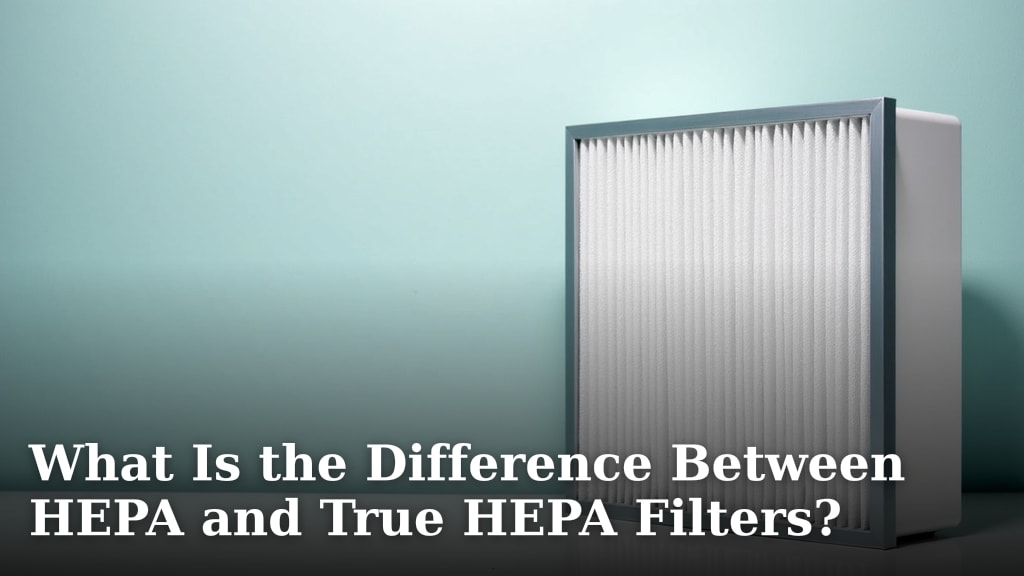
The main difference between HEPA and True HEPA filters is their efficiency at trapping tiny particles. A True HEPA filter is certified to capture at least 99.97% of airborne particles 0.3 microns in size. This is the standard most people mean when they talk about effective air filtration.
While many filters claim to be “HEPA-type” or “HEPA-like,” only a True HEPA filter meets the rigorous filtration standards set by government agencies. This means a True HEPA filter will perform better at removing common allergens and pollutants from your air. You’ll notice a clearer, cleaner breathing environment with a certified filter.
- True HEPA filters are certified to remove 99.97% of particles.
- These particles are as small as 0.3 microns.
- “HEPA-type” filters may not meet this exact standard.
- Look for the official True HEPA certification for best results.
Let’s take a closer look at what these certifications mean for your air quality and how to choose the right filter for your needs.
Understanding HEPA Filtration Standards
When you’re looking for cleaner air, you’ll often see the term “HEPA” thrown around. But what does it really mean? And are all HEPA filters created equal? We found that the answer isn’t as simple as it seems.
Understanding the difference between a true HEPA filter and other types is key. It helps you make the best choice for your home and your health. Let’s break down what makes a filter truly effective.
What Exactly Is a HEPA Filter?
HEPA stands for High-Efficiency Particulate Air. This isn’t just a fancy marketing term. It’s a standard set by the U.S. Department of Energy. To be considered a true HEPA filter, it must meet very specific performance criteria.
The most important part of this standard is its ability to trap tiny particles. We’re talking about particles so small they’re invisible to the naked eye. These can include dust, pollen, pet dander, mold spores, and even some bacteria.
The 0.3 Micron Benchmark
The critical benchmark for a true HEPA filter is its performance at 0.3 microns. This is often referred to as the Most Penetrating Particle Size (MPPS). It’s the size that’s hardest for filters to capture. A true HEPA filter must remove at least 99.97% of particles at this size.
Think of it like this: if you had 10,000 particles that were 0.3 microns in size, a true HEPA filter would capture at least 9,997 of them. This level of filtration is incredibly effective. It helps create a much healthier indoor environment.
Decoding “HEPA-Type” and “HEPA-Like”
This is where things can get a bit confusing for consumers. You might see air purifiers or filters advertised as “HEPA-type” or “HEPA-like.” These terms are not regulated. They don’t guarantee the same level of performance as a true HEPA filter.
These filters might capture a high percentage of larger particles. But they often fall short when it comes to those tiny, hard-to-catch 0.3-micron particles. The efficiency can vary greatly. You might be getting good filtration, or you might not be getting the protection you think you are.
Why Certification Matters
A filter labeled “HEPA-type” or “HEPA-like” might be *similar* to a HEPA filter. But it hasn’t gone through the rigorous testing and certification process. Many experts recommend looking for the official certification to be sure. This ensures you’re getting the genuine article.
Without a certified true HEPA filter, you can’t be certain about its effectiveness against common allergens and pollutants. This is especially important for individuals with asthma or allergies.
How HEPA Filters Actually Work
It’s fascinating to think about how these filters catch such tiny particles. It’s not just a simple sieve action. HEPA filters use a combination of physical processes to capture airborne contaminants.
We found that the unique, dense matting of fibers within a HEPA filter is key. These fibers are arranged in a random pattern. This design creates multiple mechanisms for particle capture.
The Science Behind the Capture
Several forces work together to trap particles:
- Impaction: Larger particles, due to their mass, can’t follow the air’s path around the filter fibers. They collide directly with the fibers and stick.
- Interception: Medium-sized particles follow the airflow but get close enough to the fibers to brush against them and get caught.
- Diffusion: The smallest particles move in a random, erratic way (like tiny billiard balls). This Brownian motion increases their chances of hitting a fiber, even if they are trying to move around it.
This combination of methods allows HEPA filters to capture a wide range of particle sizes effectively. It’s a sophisticated system working silently in your air purifier.
Where You’ll Find True HEPA Filters
True HEPA filters are the gold standard for air purification. You’ll find them in high-quality air purifiers designed for homes and offices. They are also used in critical environments where air purity is vital.
These include hospitals, cleanrooms, and even in some aircraft cabins. This widespread use highlights their proven effectiveness. They are trusted in situations where there’s no room for error.
Comparing HEPA Standards Globally
While the U.S. has a clear definition for HEPA filters, other countries have their own standards. It’s good to be aware of these if you’re purchasing a filter internationally or if an appliance specifies a different standard.
We found that most international standards are quite similar. They aim for comparable levels of filtration. However, the exact percentage and particle size tested might differ slightly.
The European Standard (EN 1822)
In Europe, the standard for HEPA filters is EN 1822. This standard classifies HEPA filters into different classes, from E10 to E12.
- E10: Captures at least 85% of particles at the MPPS.
- E11: Captures at least 95% of particles at the MPPS.
- E12: Captures at least 99.5% of particles at the MPPS.
Filters that meet the E12 classification are often considered equivalent to U.S. HEPA standards. Some manufacturers might even offer higher efficiency filters that go beyond E12.
Other International Variations
Other regions may have their own specific testing methods or naming conventions. However, the core principle remains the same: to ensure a high level of particle removal. When in doubt, check the product specifications for the tested particle size and capture percentage.
Many manufacturers will clearly state if their filter meets U.S. EPA standards or equivalent international benchmarks. This transparency helps you make an informed decision.
Key Differences Summarized
Let’s bring it all together. The main distinction boils down to a clear, verifiable standard.
A true HEPA filter is certified to meet a specific performance level. Filters that are “HEPA-type” or “HEPA-like” are not. They may offer some filtration, but they lack the guarantee of true HEPA effectiveness.
| Feature | True HEPA Filter | HEPA-Type/HEPA-Like Filter |
|---|---|---|
| Particle Capture Standard | ≥ 99.97% of particles 0.3 microns | Varies; not standardized. May be lower. |
| Certification | Certified to meet U.S. DOE standard (or equivalent) | Not certified to HEPA standards. Term is unregulated. |
| Effectiveness | Proven high efficiency against small airborne particles. | Variable effectiveness; may not capture smallest particles well. |
| Reliability | High – you know what you’re getting. | Low – performance can be unpredictable. |
Choosing a certified true HEPA filter provides peace of mind. You know you are investing in the best available technology for cleaner air.
Making the Right Choice for Your Home
So, how do you ensure you’re getting a true HEPA filter for your air purifier or HVAC system? It’s all about looking for the right indicators.
Your goal is to maximize the removal of allergens, dust, and other microscopic irritants. This can make a noticeable difference in your home’s air quality. We found that the effort is well worth it.
What to Look For When Buying
When you’re shopping for an air purifier or replacement filters, keep these tips in mind:
- Look for the “True HEPA” label: This is the most direct indicator.
- Check for certification: Some products will state they meet EPA standards or are certified by a third party.
- Read the specifications carefully: If it doesn’t explicitly say “True HEPA,” investigate further. Look for the capture rate and particle size.
- Be wary of vague marketing terms: “HEPA-like,” “HEPA-type,” or “99% HEPA” without further qualification can be misleading.
- Consider your needs: If you have severe allergies or respiratory issues, investing in a certified true HEPA filter is highly recommended.
A little research upfront can save you from disappointment later. You want a filter that truly delivers on its promise of cleaner air.
Conclusion
You’ve learned that a True HEPA filter is the gold standard for air purification. It’s certified to trap at least 99.97% of particles down to 0.3 microns. This is a verifiable performance you can trust for cleaner air. Be wary of “HEPA-type” or “HEPA-like” filters, as they lack this official certification and consistent effectiveness. Your health and comfort depend on making an informed choice. For the best results, always look for the True HEPA certification when purchasing an air purifier or replacement filters.
Frequently Asked Questions
Is a “HEPA-type” filter good enough for allergies?
While “HEPA-type” filters can capture some particles, they don’t meet the strict 99.97% efficiency at 0.3 microns like a true HEPA filter. If you have allergies, you might not get the level of relief you expect. For the best allergy relief, always aim for a certified true HEPA filter.
Do HEPA filters capture viruses and bacteria?
True HEPA filters are designed to capture particles as small as 0.3 microns. Many viruses and bacteria are smaller than this, but they often travel attached to larger particles like dust or water droplets. By trapping these larger particles, HEPA filters can indirectly help reduce airborne viruses and bacteria.
How often should I replace my True HEPA filter?
The replacement frequency for a True HEPA filter depends on the manufacturer’s recommendations and your home environment. Generally, they should be replaced every 6 to 12 months. Heavily polluted environments or frequent use may require more frequent changes.
Are HEPA filters the same worldwide?
Not exactly. While the U.S. standard is 99.97% at 0.3 microns, other regions have different standards, like Europe’s EN 1822. An E12 filter under the European standard is often comparable to a U.S. HEPA filter. Always check the product specifications for capture rate and particle size tested.
Can I clean a True HEPA filter instead of replacing it?
No, True HEPA filters are not designed to be cleaned. Their dense fiber structure traps particles effectively, but washing them can damage the filter media and reduce its efficiency. For optimal performance, you must replace your True HEPA filter according to the manufacturer’s guidelines.
