How to Use a Tineco Vacuum Mop
To use a Tineco vacuum mop, charge it, fill the clean-water tank, choose the right mode, and make slow overlapping passes. Empty and rinse both tanks after each use, and let the brush roll dry before storage.
On this page (11 sections)
- What should you check before your first clean?
- How do you fill the tanks the right way?
- How do you choose a cleaning mode?
- How do you use a Tineco vacuum mop on the floor?
- How do tools help with corners and other vacuums?
- Which flexible hose helps with dryer lint and vents?
- When does a multi-piece attachment set make sense?
- What routine tank care keeps a Tineco working well?
- How do you fix common Tineco problems?
- How do you store a Tineco vacuum mop after cleaning?
- Which Tineco routine fits your floors best?
To use a Tineco vacuum mop, start with a charged battery, a filled clean-water tank, and a clear floor. That setup gives you suction, water flow, and a clean brush roll at the same time.
Move slowly, as fast passes leave water behind and give the brush roll less time to pick up dirt. Slow, overlapping passes work better on hard floors.
Read your model manual before the first use, since Tineco models differ in tank size, mode names, and self-clean steps.
What should you check before your first clean?
Check the charge, both tanks, the brush roll, and the floor type before you start. That short check prevents most first-use problems.
Charge the machine fully if it is new or low, using the charging base or dock if your model has one.
Remove both tanks and inspect them. The clean-water tank should be filled to the marked line, and the dirty-water tank should be empty and rinsed.
Look at the brush roll and sensor area, and remove hair, thread, or grit. Sweep or vacuum loose crumbs first, since a floor washer is not meant for large debris.
How do you fill the tanks the right way?
Fill only the clean-water tank to the marked line and keep the dirty-water tank empty before you start. That balance helps the machine pick up water instead of pushing it around.
Use clean tap water unless your manual says otherwise. Some owners use the brand cleaning solution in the amount the manual allows, since too much soap can cause streaks and extra foam.
Do not pour cleaning solution into the dirty-water tank, which is for used water and debris.
Snap each tank in until it clicks. If you pause to empty the dirty tank, set the machine upright, switch it off, rinse the tank, and refit it before you continue.
How do you choose a cleaning mode?
Choose the mode that matches the mess, not the room name. Light dust needs less water than dried-on spills or pet messes.
Many Tineco models offer auto, suction, flash, or custom modes, and the names vary by model. Auto mode usually adjusts water and suction as it senses dirt.
Use a lower-water setting for sealed hardwood and delicate floors. Use a stronger mode for tile, vinyl, and other hard floors that can handle more water, starting with a small test area if you are unsure.
Check the floor as you go. If water pools, select less water or slow down.
If the floor looks dry and dirty, the brush roll may need rinsing or the dirty tank may be full.
How do you use a Tineco vacuum mop on the floor?
Move slowly in straight, overlapping passes and let the brush roll do the work. Gentle guide pressure is enough on most models.
Start at the far edge of the room and work toward the exit, so you do not walk over a wet floor and leave footprints.
Push forward, pause for a moment, then pull back with the same overlap. That overlap catches edges that a single pass can miss.
Keep the machine upright when you stop to empty a tank, and empty the dirty-water tank before it reaches the maximum line. For edges and corners, slow down and use short strokes, since tight corners may still need a cloth or a vacuum attachment.
How do tools help with corners and other vacuums?
Tools help most when you need reach past the floor washer head. Corners, vents, and car seats need a different shape than a wide brush roll.
If you are switching between machines, our guide to How To Use Vacuum Cleaner Attachments? explains how crevice tools and brushes fit different jobs.
For a standard vacuum, How To Assemble A Vacuum Cleaner? shows the basic setup order. That order matters when you move from floor washing back to suction cleaning.
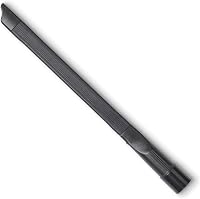
A long flexible tool can reach places a floor washer cannot. The FUR-EEL Vacuum Attachment is an 18 inch long crevice tool for vacuum use, with a skinny bendable nozzle for car seats, sofa crevices, and areas behind skirting boards.
It fits 1-1/4 inch, 1-3/8 inch, and 1-1/2 inch round vacuum hoses. Dyson, Electrolux, and other oval or non-standard connections need a separate adapter, and that adapter is not included.
Use gentle curves with this tool. A very sharp bend can narrow airflow and cause debris to clog the narrow passage.
It is a crevice nozzle for reach, not a brush head, so pair it with a brush if you need to lift embedded hair.
Which flexible hose helps with dryer lint and vents?
A vent tool helps when lint sits outside the reach of a floor washer. Dryer vents, wall gaps, and narrow slots need a slim hose or nozzle.
The best flexible crevice tool for vacuum use depends on hose size and the gap you need to reach. Measure the opening first, since a tool that is too wide will not fit.
The Fullclean Dryer Vent Lint Vacuum Atttachments kit is made for Dyson V15, V15s, Gen5, V12, V11, V10, V9, V8, V7, Detect, Absolute, Cyclone, Outsize, and Slim models. It is not for non-Dyson vacuums, Dyson V6, SV09, SV03, DC models, Ball or Canister Animal models, or upright floor models.
The hose is 31.5 inches without the adapter, the crevice nozzle is 9.65 inches long, and the brush is 26.77 inches long. The hose fits crevices more than 0.5 inches wide, so check the gap before you force it in.
Attach the adapter to the hose, connect it to the vacuum, and slide the nozzle into the gap. Use this kit for accessible openings only, since it is not a dryer-duct brush and should not be forced into enclosed ducts.
When does a multi-piece attachment set make sense?
A multi-piece set makes sense when you switch between brushes, crevice tools, and adapters often. One set can cover home and car tasks without buying each shape alone.
The LANMU 9 Pack 1 1/4" Vacuum Attachments set includes 2 adapters and 7 brush heads for different cleaning needs. Compare Shark Navigator attachment options if you need tools for one of those models.
It is compatible with Shark Navigator Lift-Away NV360, NV352, NV356E, NV350, Rotator NV500, NV501, and Rocket HV300, HV301, HV322 models.
The flexible crevice tool in this set reaches corners, heating ducts, under furniture, car seats, and alongside appliances. The horsehair brush has soft, dense bristles for sofas, stairs, blinds, keyboards, baseboards, tracks, bookshelves, and drawers.
No tools are needed to switch heads. Skip this set if your vacuum does not match the listed Shark models, and check the exact model number before you order.
What routine tank care keeps a Tineco working well?
Rinse both tanks, the brush roll, and the filter area after each use. Dried dirt and mildew are the main causes of odor and poor pickup.
Empty the dirty-water tank right after you finish, rinse it with clean water, and let it air dry with the lid open if the manual allows.
Remove the brush roll if your model allows it, then rinse it under running water and let it dry fully before you refit it.
Wipe the sensor window, wheel area, and housing with a damp cloth, and check the filter and tank seals for hair and grit. Run the self-clean or drying cycle if your model has one.
How do you fix common Tineco problems?
Fix streaks, weak suction, and odor by cleaning the brush roll and tanks first. Most routine problems come from a dirty roller, a full dirty tank, or excess water.
For streaks, slow down and use less water. For weak suction, check that both tanks are seated, the brush roll is free of hair, and the filter is clean.
For odor, rinse the brush roll, empty and rinse both tanks, and let parts dry with air flow. For water leaks, dry the tank rims and refit each tank until it clicks.
If the machine stops mid-clean, switch it off and check the dirty tank level. Many models pause when the tank is full, and the warning light or beep is easy to miss.
How do you store a Tineco vacuum mop after cleaning?
Store it upright, dry, and empty in a cool spot away from direct heat. That habit protects the brush roll, seals, and battery.
Place the machine on its base or dock only after the brush roll is dry. A damp roller left in a closed housing can develop odor fast.
Keep the charging contacts clean and dry, and check the cable for damage before storage.
Do not store the machine with a full dirty-water tank. Empty and rinse it, then leave the lid open to dry if your manual allows that step.
Which Tineco routine fits your floors best?
Pick a slow, overlapping pass, correct water level, and full rinse after each use as your base routine. That rule works for most sealed hard floors and most Tineco models.
Pick a lower-water mode for sealed hardwood and laminate, and a stronger mode for tile and vinyl that can handle more water. Test a small area first if you are unsure about the finish.
Pick the FUR-EEL tool for long reach around cars and sofas, the Fullclean kit for Dyson vent and gap cleaning, or the LANMU set for Shark brush and crevice variety. Each one solves a different reach problem.
For model picks by floor type, see the Best Tineco Vacuum For Hardwood Floors guide. For pet hair on hard floors and rugs, see the Best Tineco Vacuum For Pet Hair guide.
If you switch to a cordless stick vacuum for daily dust, learn the setup first. Our guide on how to use shark powerdetect cordless vacuum can help you compare that routine with a Tineco floor washer.
Frequently asked questions
How often should you clean a Tineco vacuum mop?
Rinse the brush roll, empty the dirty-water tank, and wipe the housing after each use. Do a deeper rinse and check the filter weekly if you use the machine often, and follow your model manual for exact intervals.
Can you use a Tineco vacuum mop on hardwood floors?
Yes, most Tineco floor washers are made for sealed hard floors such as hardwood, tile, and laminate. Avoid excess water on delicate wood, and check your floor finish and the machine manual before the first clean.
Why does a Tineco vacuum mop leave streaks?
Streaks often come from too much water, a dirty brush roll, or moving too fast. Slow down, make overlapping passes, empty the dirty tank, and let the machine run its drying or self-clean cycle if your model has one.