Air Purifier vs Air Filter: Which Do You Need? (November 2026)
Choose an air purifier for targeted room cleaning and an air filter for your home's HVAC system. An air purifier works as a separate appliance, while an air filter fits inside a furnace, air conditioner or heat pump.
On this page (7 sections)
Choose an air purifier for targeted room cleaning and an air filter for your home's HVAC system. An air purifier is a powered appliance that cleans air in a room, while an air filter fits inside a furnace, air conditioner or heat pump.
The best choice depends on where you need filtration. An HVAC filter works as part of your home's air moving system, while a standalone purifier gives you direct control over one space.
This comparison covers room coverage, filter ratings, airflow, setup and upkeep. It compares 2 HVAC filters and 2 standalone purifiers to help you match the option to your room and routine.
An HVAC filter has no motor, fan or controls. It only filters air when your furnace, air conditioner or heat pump draws air through it.
A standalone purifier has its own motor and fan. It pulls room air through its filters and pushes cleaned air back out, even when your central system is idle.
That difference shapes coverage, noise, placement and replacement schedules. Filtration happens inside a shared system or inside a single room.
For most homes, the HVAC filter is a maintenance item. You measure the slot, match the nominal size, slide in the right filter and replace it on schedule.
A room purifier is a placement decision. You choose a bedroom, office or shared space, find an outlet nearby and keep the intake and outlet clear.
The two approaches are not mutually exclusive. Many homes keep a correctly sized HVAC filter for system-wide filtration and add a purifier where extra room-level cleaning is wanted.
The products in this guide illustrate that split. Two options are 1-inch HVAC replacement filters with different sizes and MERV ratings.
The other two options are separate Levoit appliances for bedrooms, offices and other personal spaces. Use the sections that follow to weigh practical factors rather than labels alone.
Look at dimensions, airflow, noise and care needs, then choose the option that fits how your home actually runs.
 Best for HVAC allergy filtration
Filterbuy 18x24x1 Air Filter MERV 8 Dust

Air purifier vs air filter: what is the main difference?
An air filter belongs inside an HVAC system, and an air purifier operates as a separate appliance. They can work together because they handle air in different ways.
The Filterbuy 18 x 24 x 1 and Filtrete 20 x 25 x 1 products are replacement filters. Their nominal sizes describe the HVAC slots they are designed to fit, but their actual dimensions are slightly smaller.
The Levoit Core 300-P and Core Mini-P are standalone appliances. You place them in a room, connect power and use their built-in filtration as air moves through the unit.
An HVAC filter only works when air passes through the furnace, air conditioner or heat pump. A separate purifier can keep filtering a room when the central system is off, provided it has power and enough open airflow around it.
Think of the HVAC filter as part of a larger air path. Its job begins when the system calls for heating or cooling and air is pulled across the pleated media.
Think of the purifier as its own small air path. Its fan creates the movement, its filters do the capture, and its placement decides which part of the room benefits most.
That is why size checks matter so much for filters. A filter that does not match the slot cannot do its job, no matter how strong its rating sounds on the package.
Placement checks matter just as much for purifiers. A unit pushed into a corner, blocked by furniture, or tucked behind a curtain may run all day without moving air freely.
Neither option replaces the other by default. The HVAC filter protects the central system path, and the purifier adds independent room cleaning that the central system may not provide on its own.
Which option suits your home?
Choose an HVAC filter for whole-system maintenance and an air purifier for focused room cleaning. Your home's layout and daily routine matter more than choosing one category for every situation.
An HVAC filter makes sense when your main goal is to maintain filtration in the central air path. First check the filter slot, nominal size and rating your system allows.
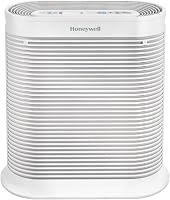
A room purifier makes sense when one bedroom, office or living space needs more direct attention. For a washable-filter option, see our Honeywell AirGenius 5 review.
It can also help when you spend most of your time in one room and don't want to run the central system continuously.
For a broader explanation of room placement, airflow and selection, see this guide to what is an air purifier for home.
When should you choose an HVAC air filter?
Choose an HVAC filter when your furnace, air conditioner or heat pump needs a correctly sized replacement. The filter must fit the slot and allow the system to move air as intended.
The Filterbuy option is an 18 x 24 x 1 filter with MERV 8 pleated synthetic media. Its actual dimensions are 17.38 x 23.38 x 0.75 inches, and its frame has dual wire backing.
The Filtrete option is a 20 x 25 x 1 pleated filter with MERV 5 and MPR 300. Its actual dimensions are 19.69 x 24.69 x 0.81 inches, and the pack includes 6 filters.
Choose between these by matching the exact HVAC size first. A higher rating is not a reason to force a filter into the wrong slot or ignore the system's airflow requirements.
When should you choose a standalone air purifier?
Choose a standalone air purifier when you want room-level filtration with published airflow or noise details. For another room purifier, read our Winix A230 review.
These units need a nearby power outlet and open space for air intake and exhaust.
The Levoit Core 300-P has a 143 CFM smoke CADR, a 153 CFM dust CADR and a 167 CFM pollen CADR. It is rated for a 222 square foot room at 4.8 air changes per hour and a 1,073 square foot room at 1 air change per hour.
The Levoit Core Mini-P has a compact 6.5 x 6.5 x 10.4 inch size and 7W rated power. Its noise level is 27–45 dB, and it has a pre-filter and main filter.
Read more about the filter type in what is a HEPA filter air purifier and what is a HEPA air purifier. Those explanations can help you separate a filter label from the airflow and room-size details that shape daily performance.
Is MERV the same as HEPA?
MERV and HEPA describe different parts of the filtration conversation, so don't compare the labels as if they were identical. MERV is a rating used for HVAC filters, while HEPA describes a high-efficiency filter class or claim used in air-cleaning products.
The Filterbuy filter has a MERV 8 rating. The Filtrete filter has a MERV 5 rating and an MPR 300 rating.
The Levoit Core 300-P uses a 3-stage filtration system, and its Original Filter is described as HEPA-grade while operating in Sleep Mode. Levoit also states 99.97% filtration efficiency for 0.1 to 0.3 micron airborne particles, including pollen, dust and animal dander allergens.
The Core Mini-P uses a pre-filter and main filter. Its product information focuses on capturing lint, hair, pet dander, fine airborne pollutants and smoke particles.
For a vacuum-specific explanation, compare this guide on what is a HEPA filter in a vacuum. Vacuum filtration and room-air filtration serve different appliances, even when similar terms appear in both categories.
Which air option is better for pets and allergies?
A standalone purifier is usually the more direct choice for a bedroom or other room where pet particles are a concern, while an HVAC filter supports filtration across the central system. Use both when each solves a different part of your home's airflow pattern.
The Core 300-P identifies pet dander and pet hair among its contaminant targets. Its published pollen and dust CADR figures also give you more room-level performance information than an HVAC filter's MERV rating alone.
The Filterbuy MERV 8 filter is a better fit when your HVAC slot accepts 18 x 24 x 1 filters and you want filtration for pollen, lint, mold and dust through the central system. Its 14 pleats per foot and electrostatically charged media are designed for HVAC use.
The Filtrete MERV 5 filter fits a different nominal size. It is a reasonable match for a compatible 20 x 25 x 1 residential furnace or air conditioner when basic dust and lint control is the priority.
Don't put an HVAC filter behind a standalone purifier unless the appliance is designed for that filter. Likewise, don't treat a room purifier as a substitute for maintaining the filter your central system requires.
Which choice is quieter at night?
Choose the Core 300-P when a published 24 dB Sleep Mode matters, or the Core Mini-P when a compact purifier with a 27-45 dB range fits your room. HVAC filters do not have a standalone noise rating because they have no motor of their own.
An HVAC filter can still affect how a furnace or air conditioner sounds if it changes airflow resistance. A louder system is not a reason to remove the filter, so use the rating and size your system supports.
The Core 300-P lets you turn off display lights and includes a timer for 2, 4, 6 or 8 hours. The Core Mini-P has an auto-off display and Sleep Mode for quieter nighttime use.
Nighttime noise is a fair reason to compare purifiers closely, because a unit that hums, clicks or glows can undo the rest it is meant to support. Sleep Mode matters in practice, not just as a label.
On the Core 300-P, Sleep Mode is tied to a published 24 dB figure. That makes it easier to judge whether it fits a bedroom, a guest room or a quiet home office used late at night.
The Core Mini-P takes a different approach for smaller spaces. Its 27-45 dB range sits higher at the top end, but its compact size and 7W rated power suit a personal setup where a larger appliance would feel out of place.
That smaller footprint is part of the nighttime trade-off. A compact unit can sit on a desk or nightstand area without dominating the room, and its auto-off display helps reduce light disturbance.
The Core 300-P gives you more direct control over light and runtime. Turning off the display lights can help in a dark bedroom, and the timer lets you match operation to the hours you want it running.
Neither purifier needs to run at full speed all night. Lower settings, a timer and a dimmed or off display are often the difference between a helpful appliance and an annoying one.
HVAC filters do not hum on their own. Any change in sound comes from the furnace, air conditioner or heat pump moving air through the system, and a filter that restricts airflow can make the central unit work harder.
The honest trade-off is that quiet room cleaning comes with a separate appliance to place, power and maintain. If whole-home system filtration is the priority, keep the HVAC filter in place and add a purifier only where it adds real value.
How do you install and care for each one?
Install an HVAC filter in the correct slot with the airflow direction followed, and place a standalone purifier where its intake and outlet are not blocked. Good fit and clear airflow support the device's intended operation.
Check the arrow on an HVAC filter before sliding it into place. Record the installation date so you can plan replacement instead of waiting for visible dust or a drop in comfort.
Filterbuy recommends replacing its filter every 90 days for optimal performance. Filtrete also recommends changing its filter at least every 90 days, and its smart app can set 30-, 60- or 90-day reminders.
For purifier care, watch the filter indicator and follow the replacement guidance for the exact model. Compare air purifier replacement filters when it is time to change one.
Levoit recommends replacing the Core 300-P filters every 6 to 8 months.
This guide to how to clean a vacuum filter covers vacuum care rather than air-purifier care, but the same basic caution applies: follow the appliance manual before washing or reusing any filter. Not every filter is washable.
What is the better air purifier vs air filter choice?
Pick an HVAC air filter when you need a correctly sized replacement for your central system. Pick a standalone air purifier when you need focused room cleaning, published CADR information or quieter nighttime operation.
Choose the Filterbuy MERV 8 filter for compatible 18 x 24 x 1 HVAC slots and stronger filtration than the Filtrete MERV 5 option. Choose the Filtrete pack for compatible 20 x 25 x 1 systems and a 6-filter supply for scheduled changes.
Choose the Core 300-P when you want a separate purifier with published smoke, dust and pollen CADR figures. Choose the Core Mini-P when a small 7W purifier suits your bedroom, kitchen or office better.
If you are comparing room purifiers, our guide to the best air purifier with HEPA filter can help you continue from room size and filter type. The simple decision rule is to maintain your HVAC filter first, then add a purifier where your daily air-cleaning need is most concentrated.
Frequently asked questions
What is the difference between an air purifier and an air filter?
An air purifier is a powered appliance that pulls room air through its filters and returns cleaned air. An air filter is a replaceable filter that fits inside an HVAC system, such as a furnace or air conditioner.
One targets a room directly, while the other filters air moving through the home's system.
Is an air purifier better than an HVAC air filter?
Neither is always better. An HVAC filter is the right choice for routine filtration as air moves through a compatible furnace, air conditioner or heat pump.
A standalone air purifier is better when you want targeted cleaning in one room, especially where the HVAC system runs infrequently.
Can an air purifier replace an air filter?
No. A standalone air purifier does not replace the filter inside your furnace, air conditioner or heat pump.
Keep the HVAC filter that matches your system's required size and rating, then add an air purifier when you want extra room-level filtration.
Do air purifiers remove more particles than air filters?
The answer depends on the filter rating, airflow and how often air passes through the device. The Levoit Core 300-P publishes CADR figures for smoke, dust and pollen, while the Filterbuy and Filtrete products are HVAC filters with MERV ratings.
Compare the complete system, not the label alone.
Which should you buy for pet hair and allergies?
Choose an air purifier for targeted room cleaning when pet dander and airborne particles are your main concern in a bedroom or living space. Keep a correctly sized HVAC filter too.
The Levoit Core 300-P includes pet dander and pet hair among its filtration targets, while Filterbuy offers MERV 8 HVAC filtration.