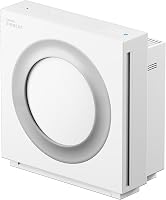
What Is a HEPA Air Purifier?
A HEPA air purifier uses a fan and fine-particle filter to reduce airborne dust, pollen, smoke particles, and pet dander. Its real-world usefulness also depends on airflow, room size, filter care, and correct placement.
On this page (9 sections)
- How does a HEPA air purifier work?
- What does HEPA filtration remove?
- What do particle size and filtration percentages mean?
- What is CADR, and why does it matter?
- Where should you place a HEPA air purifier?
- How do HVAC filters compare with HEPA purifiers?
- How do you choose a HEPA air purifier?
- How should you maintain a HEPA air purifier?
- What is a HEPA air purifier best for?
A HEPA air purifier uses a fan to pull room air through a fine-particle filter, then sends filtered air back into the room. It can help reduce airborne dust, pollen, smoke particles, and pet dander, but performance depends on airflow, room size, placement, and filter care.
A purifier only cleans air that reaches its filter. Placement and run time therefore matter as much as the filter label.
HEPA stands for high-efficiency particulate air.
The term describes particle filtration, not the entire appliance. An air purifier is the complete unit with a housing, a fan, controls, and a filter.
HEPA is one part of that system. Some units add other layers for larger particles or odors.
That distinction matters because two machines can both mention fine-particle filtration while moving very different amounts of air. One may suit a small bedroom with quiet overnight use, while another may suit a larger open room where faster circulation matters more.
To understand the difference, read what is a HEPA filter in an air purifier before comparing complete machines. It keeps the focus on the whole appliance rather than a single word on the box.
Look at stated room size and clean air delivery rate when you compare options. Those figures say more about daily use than a broad claim about cleaner air in every room.
Filter care also shapes results over time. A clogged or overdue filter can reduce airflow, so a purifier still needs regular checks and timely replacement.
Noise matters too, especially if the unit will run while you sleep or work. Start with the room you use most and the hours you plan to run it, then judge whether fine-particle filtration fits your home and routine.
How does a HEPA air purifier work?
A HEPA air purifier works by moving room air through one or more filter layers. A fan draws air into the housing, larger particles may be caught first, and the fine-particle filter captures smaller airborne particles before the air exits.
The pre-filter helps catch larger material such as hair and lint. The fine-particle layer handles smaller particles, while an added filter layer may target odors or gases if the model includes one.
Air must pass through the filter for filtration to happen. A purifier with a higher-efficiency filter can still be a poor fit if its airflow is too low for the room or if the filter is clogged.
What does HEPA filtration remove?
HEPA filtration targets airborne particles, not every type of indoor pollution. Dust, pollen, smoke particles, and pet dander are common targets, although exact performance depends on the purifier and its filter.
Think of the purifier as working on what is floating in the air at that moment. Particles that move through the intake can be captured, while particles that stay settled or trapped in upholstery sit outside that direct path.
It cannot remove dust that has already settled on a floor or shelf unless that dust becomes airborne again. Regular cleaning still matters, especially in homes with pets, rugs, or heavy dust.
Vacuuming, dusting, and washing bedding can reduce material available to become airborne later. Used together with a purifier, those habits support the same goal from a different angle.
HEPA filtration is also not the same as odor removal. Odor control usually needs a separate material such as activated carbon, and the amount and design of that material affect how useful it is.
That is why some purifiers use a multi-stage filter. A pre-filter may handle larger material, the fine-particle layer handles smaller airborne particles, and a carbon layer may address odors or gases when included.
Smoke shows the limits clearly. A purifier may help reduce smoke particles, but it does not make a smoky room equivalent to a room with clean outdoor air.
Pets bring a similar mix. Pet dander can be an airborne target, while pet hair often needs surface cleaning and a pre-filter to keep larger material from building up.
Read the filter details rather than assuming every pollutant is covered the same way. Knowing which particles and other pollutants a unit targets gives a more honest picture of daily use.
What do particle size and filtration percentages mean?
A filtration percentage describes how much of a stated particle range the filter captures under a test condition. It does not mean that the same percentage of all room pollution disappears after one pass or one hour.
For example, the Levoit Core 300-P states 99.97% filtration efficiency for 0.1 to 0.3 micron airborne particles, including pollen, dust, and animal dander allergens. Its filter is described as HEPA-grade while operating in Sleep Mode, based on independent laboratory testing.
Particle size is only one part of the decision. A purifier's clean air delivery rate, room coverage, fan setting, and filter condition tell you more about how quickly it can affect the air around you.
What is CADR, and why does it matter?
CADR means Clean Air Delivery Rate, or the amount of filtered air a purifier delivers for a specific particle category. Higher CADR can help a unit clean a room faster, but you still need to match the purifier to the room and use pattern.
The Levoit Core 300-P lists CADR values of 143 CFM for smoke, 153 CFM for dust, and 167 CFM for pollen. It states that the purifier refreshes air 4.8 times per hour in a 222 sq ft room and once per hour in a 1,073 sq ft room.
Coverage figures aren't interchangeable between brands. Compare the room size, CADR, and intended fan setting instead of relying on a large coverage number alone.
Where should you place a HEPA air purifier?
Place the purifier where it has open space around its air intake and outlet. Keep curtains, furniture, walls, and bedding from blocking airflow, and put the unit near the room where you spend the most time.
A bedroom purifier may work best when it can run quietly for long periods. The Levoit Core 300-P has a stated 24 dB Sleep Mode, while the AROEVE MK01A states filtered-air noise as low as 22 dB in Sleep Mode.
AROEVE describes the MK01A as using dual-channel and 360-degree air inlets and circulating air in rooms up to 287 sq ft. It also has an aroma pad for 4 to 5 drops of essential oil, which is not included.
Keep any power cord away from pets that may chew it. Follow the unit's safety instructions, and don't place a purifier where moisture or objects can enter the housing.
How do HVAC filters compare with HEPA purifiers?
An HVAC filter protects the heating and cooling system while filtering air moved by the furnace, air conditioner, or heat pump. It is not the same as a portable HEPA air purifier, which has its own fan and operates in a selected room.
The Filterbuy 18x24x1 filter has a MERV 8 rating and pleated electrostatic media. Its stated compatible devices include air cleaners, air conditioners, furnaces, HVAC systems, and heat pumps.
Its actual dimensions are 17.38 x 23.38 x 0.75 in, so measure the existing filter and filter slot before ordering. Filterbuy states that its media captures 90% of dust and recommends replacement every 90 days for optimal performance.
MERV and HEPA are different rating systems. For more context on vacuum filtration, see what is a HEPA filter in a vacuum and what is a HEPA filter in a vacuum cleaner.
How do you choose a HEPA air purifier?
Choose a purifier by room size, airflow, filter type, noise level, and replacement needs. Start with the room where you need cleaner air, then compare the stated CADR and coverage with the way you plan to run the unit.
A small bedroom may favor a compact unit with Sleep Mode. The AROEVE MK01A is 6.1 x 6.1 x 9.7 in and weighs 3 lb, while the Levoit Core 300-P measures 8.7 x 8.7 x 14.2 in and weighs 7.9 lb.
For pet hair and dander, look for a pre-filter or multi-stage design that can handle larger material before air reaches the fine-particle layer. The Levoit lists pet hair, pet dander, pollen, dust, smoke, odors, and VOCs among its filtration targets.
For broader comparisons, see best air purifiers with HEPA filters. If you are comparing one brand's models, our best Dyson air purifiers guide can help with that decision.
How should you maintain a HEPA air purifier?
Maintain a HEPA purifier by keeping its air path clear and replacing filters when the unit indicates or the instructions recommend. Turn the unit off before cleaning its exterior, and don't wash a filter unless the instructions specifically allow it.
The Levoit description recommends replacing its filter every 6 to 8 months. AROEVE recommends replacing the MK01A filter every 3 to 6 months and uses a red indicator light as a replacement reminder.
Filter life changes with smoke, pets, dust, fan speed, and hours of use. A purifier that sounds strained or moves less air may need attention sooner, but don't open the housing or alter the filter design.
What is a HEPA air purifier best for?
A HEPA air purifier is best for reducing airborne particles in a room where you can run it consistently. Compare air purifiers on sale by room coverage, airflow, and filter needs.
Choose Levoit when you want stated CADR figures and a 3-stage filter, AROEVE for a smaller bedroom unit with quiet Sleep Mode, or Filterbuy for compatible HVAC filter replacement.
Use a purifier alongside regular cleaning and ventilation when appropriate. If you need help choosing for a home, start with what is an air purifier for home, then compare the room size, airflow, noise, filter cost, and maintenance routine that fit your space.
Frequently asked questions
What does a HEPA air purifier remove?
A HEPA air purifier can reduce airborne particles such as dust, pollen, smoke particles, and pet dander when air passes through its filter. It does not remove every indoor pollutant, and particle removal depends on airflow, filter condition, room size, and how long the unit runs.
Is HEPA the same as an air purifier?
No. An air purifier is the complete appliance, including the fan, housing, controls, and filter.
HEPA describes a type of fine-particle filtration used inside some air purifiers.
A purifier may also include a pre-filter or other filter layer for larger particles and odors.
What does 99.97% HEPA filtration mean?
The 99.97% figure refers to filtration efficiency for particles in a stated size range under specific test conditions. It does not mean the purifier removes 99.97% of all pollution from a room.
Room coverage, CADR, placement, and filter changes still affect results.
How often should you replace a HEPA purifier filter?
Use the replacement interval for your purifier and watch for its filter indicator. The right timing changes with use, pets, smoke, dust, and indoor air conditions.
A clogged filter can reduce airflow, so inspect and replace it when the instructions call for a change.