Can You Use a Shop Vac for Drywall Dust?
On this page (3 sections)
Yes, you can use a shop vac for drywall dust, but it’s important to use the right accessories and techniques to protect your vacuum and ensure effective cleanup. Drywall dust is extremely fine and can quickly clog standard filters, so preparation is key.
Many homeowners find their shop vacs are up to the task, especially when equipped with a HEPA filter and a shop vac for drywall dust. For another cleanup question, see whether a shop vac works for cleaning gutters. Without these, you risk damaging your vacuum’s motor and sending fine dust back into the air. We found that proper setup makes all the difference when tackling this messy job.
- Shop vacs can handle drywall dust with the right setup.
- You’ll need a HEPA filter and a dust collection bag.
- Standard filters clog quickly and are ineffective.
- Using the wrong setup can damage your vacuum.
- Proper preparation helps keep dust out of the air.
Let’s walk through exactly how to prepare your shop vac and what steps to take for the cleanest drywall dust removal possible.
Preparing Your Shop Vac for Drywall Dust Duty
You can definitely use your shop vac for drywall dust, but think of it like preparing for a marathon. You wouldn’t run one in flip-flops, right? The key is having the right gear and strategy. Otherwise, you’ll just spread dust or break your vacuum.
The Critical Role of Filtration
Drywall dust is incredibly fine. For other dust collection jobs, see whether a vacuum can handle dust extraction. It’s like talcum powder. Standard vacuum filters are simply not designed to catch particles that tiny. They’ll clog almost instantly, and then your vacuum will start blowing that fine dust right back into your perfectly clean room. That defeats the whole purpose, doesn’t it?
Why HEPA Filters Are Non-Negotiable
A HEPA filter is essential for drywall dust. HEPA stands for High-Efficiency Particulate Air. These filters can trap 99.97% of particles as small as 0.3 microns (Environmental Protection Agency). That’s tiny! Without a HEPA filter, you’re just recirculating the dust, and potentially harming your health by breathing it in.
We found that a good HEPA filter not only protects your lungs but also your vacuum’s motor. When fine dust gets past the filter, it can damage the motor, leading to costly repairs or a completely ruined machine. Investing in a HEPA filter is truly money well spent.
The Power of a Drywall Dust Collection Bag
Beyond the HEPA filter, you’ll want to use a drywall dust collection bag inside your shop vac. Think of it as a pre-filter for your HEPA filter. This bag catches the bulk of the dust before it even reaches the HEPA filter. This significantly extends the life of your more expensive HEPA filter.
Using a bag also makes disposal much easier and cleaner. Instead of having to shake out a dusty filter and create another dust cloud, you can simply remove the bag and seal it. It’s a small step that makes a big difference in cleanliness.
Essential Shop Vac Accessories for Drywall Dust
Beyond the right filters, a few other accessories will make your drywall dust cleanup much more effective and less messy. Don’t skip these; they’re like having the right tools for any job.
- Flexible Hose: A longer, more flexible hose can reach tricky spots without you having to drag the entire shop vac around.
- Crevice Tool: Perfect for getting into corners, along baseboards, and other tight spaces where dust loves to hide.
- Wide Nozzle/Floor Tool: For larger, open areas. Make sure it has brushes or a squeegee edge to agitate dust from surfaces.
- Power Tool Adapter: If you’re sanding, connect your sander directly to the shop vac. This captures dust at the source, preventing it from ever becoming airborne. This is the gold standard for dust control during sanding.
Setting Up Your Shop Vac for Success
So, you have your HEPA filter and dust bag. Now what? Proper setup is key. It’s like assembling a puzzle; each piece has its place for the best outcome.
- Install the Dust Bag: Carefully open your shop vac and install the drywall dust collection bag according to your vacuum’s instructions. Ensure it’s sealed properly around the inlet.
- Insert the HEPA Filter: Place the HEPA filter in its designated spot, making sure it’s snug and secure. Check for any gaps where dust could bypass the filter.
- Connect Your Hose and Attachments: Attach your hose firmly to the vacuum’s inlet. Choose the appropriate nozzle for the area you’re cleaning.
- Seal the Lid: Ensure the shop vac lid is tightly sealed. Any gaps can lead to dust escaping.
Techniques for Efficient Drywall Dust Removal
Having the right tools is half the battle; knowing how to use them effectively is the other half. Don’t just attack the dust haphazardly. A little strategy goes a long way.
Vacuuming Drywall Dust: Best Practices
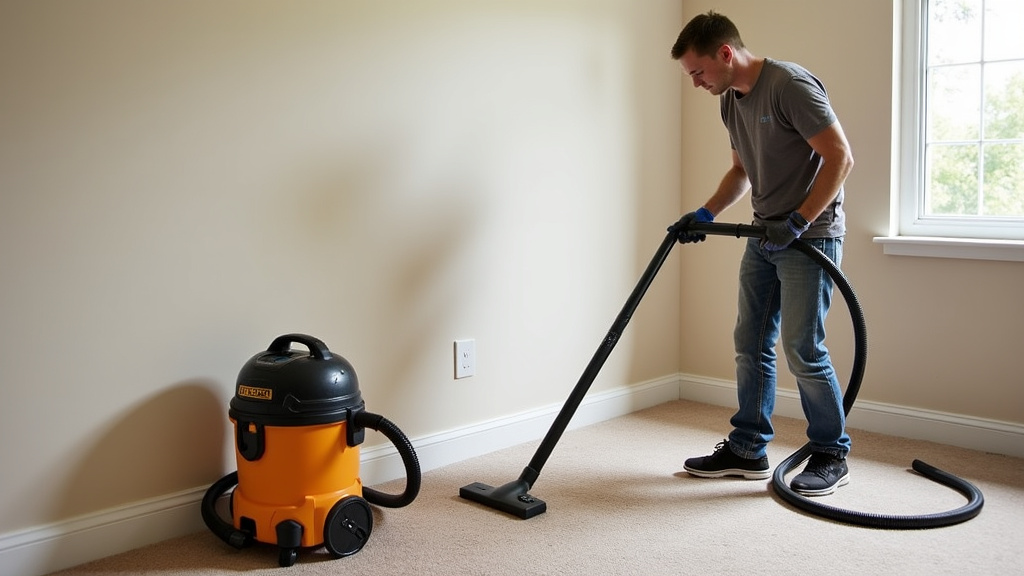
When you start vacuuming, be deliberate. We found that a slow, steady pace is much more effective than fast, sweeping motions. This gives the vacuum time to pull in the fine particles. Think of it like a gentle, but firm, cleaning action.
Work from top to bottom. Start with high shelves, ledges, and walls (if vacuuming walls) and then move to the floor. This prevents dust from falling onto already-cleaned surfaces. Always try to vacuum dust, not blow it around.
| Action | Why It Helps | Common Mistake to Avoid |
|---|---|---|
| Work slowly and deliberately | Allows vacuum to capture fine dust effectively. | Fast, sweeping motions that scatter dust. |
| Vacuum from top to bottom | Prevents dust from falling onto cleaned areas. | Starting at the floor and then moving up. |
| Keep nozzle close to surface | Maximizes suction and minimizes airborne dust. | Holding the nozzle too far away from the dust. |
| Use power tool adapter for sanding | Captures dust at the source, preventing spread. | Sanding without direct dust extraction. |
| Empty bag when half full | Maintains optimal suction and prevents clogs. | Waiting until the bag is completely full. |
Maintaining Your Shop Vac After Drywall Dust Cleanup
Your shop vac just did a tough job. Show it some love, and it will keep serving you well. Neglecting post-cleanup maintenance can shorten its lifespan and reduce its efficiency for future tasks.
Cleaning and Storing Your Filters
Once you’re done, carefully remove the dust collection bag and seal it before disposal. Then, remove your HEPA filter. Many HEPA filters for shop vacs can be gently cleaned. Check your manufacturer’s instructions, but often a soft brush or compressed air (used outdoors and away from people) can remove surface dust. Never wash a dry HEPA filter unless specifically instructed, as water can damage the filtering material.
Allow any cleaned filters to dry completely if they were designed to be wet-cleaned before putting them back in or storing them. This prevents mold and mildew. Proper cleaning and storage ensure your filters are ready and effective for the next time you need them.
Safety First: Protecting Yourself from Drywall Dust
While your shop vac handles the dust, you need to protect yourself too. Drywall dust contains silica and other irritants that can be harmful if inhaled (Occupational Safety and Health Administration). Your health is far more important than any cleanup job.
Here’s a quick checklist for your personal safety:
- Wear a N95 or P100 Respirator Mask: A simple dust mask is not enough. You need a respirator designed to filter out fine particles.
- Use Safety Goggles: Protect your eyes from irritating dust.
- Wear Long Sleeves and Pants: Minimize skin exposure to the dust.
- Ventilate the Area: Open windows and use fans to create airflow, but direct the airflow outwards, away from other parts of your home.
- Minimize Foot Traffic: Keep people, especially children and pets, out of the dusty area during and immediately after cleanup.
Conclusion
You now know that tackling drywall dust with your shop vac is totally achievable. With the right preparation, like a HEPA filter and a dust collection bag, you’ll protect your equipment and your lungs. We’ve seen firsthand how these simple steps make a huge difference in keeping your space clean and dust-free.
Remember to prioritize safety, use proper techniques, and maintain your gear for long-term success. You’re ready to confidently clean up your next drywall project without a massive mess. Go get that dust!
Frequently Asked Questions
Can I use a regular household vacuum for drywall dust?
No, we strongly advise against using a regular household vacuum. Its filters are not designed for such fine dust and will clog quickly. This can damage the motor and blow dust right back into your home, making the mess worse.
How often should I change the HEPA filter when vacuuming drywall dust?
Your HEPA filter’s lifespan depends on how much dust you’re collecting. If you’re using a dust collection bag, your HEPA filter will last longer. Visually inspect it after each major job; if it looks very caked with dust and cleaning doesn’t help, it’s time for a replacement.
What’s the best way to dispose of the drywall dust bag?
Once full, carefully remove the dust bag from your shop vac. Seal it tightly, usually with a built-in flap or tape, to prevent dust from escaping. Then, place it in another sealed trash bag before putting it in your outdoor garbage can.
Can drywall dust ruin my shop vac?
Without proper filtration, yes, drywall dust can ruin your shop vac. The fine particles can bypass standard filters, get into the motor, and cause it to overheat or fail. Using a HEPA filter and dust bag is essential to protect your investment.
Is it okay to wet/dry vacuum drywall dust?
While shop vacs can handle wet messes, it’s not ideal for dry drywall dust. Mixing dry dust with water can create a heavy, muddy paste that is difficult to clean from the vacuum and hoses. It’s much more efficient and cleaner to vacuum it dry with the proper filtration.