Water-Based Air Purifiers: What to Look For
A water-based air purifier uses water to catch some particles, but it should not be assumed to clean air like a properly sized filter purifier. Check what the design removes, how it handles fine particles and odors, and how often its water needs cleaning.
On this page (6 sections)
An air purifier with water uses water as part of its air-cleaning design, but water alone doesn't guarantee effective particle removal. Check whether it has a rated filter, credible performance information for your room size, and a cleaning routine you can keep up with.
Some devices pull air through water or make it pass over a wet surface. Others are humidifiers that add moisture, sometimes with a basic filter.
Those jobs can overlap in a product, but they are not interchangeable.
For a broader overview of room sizing and filter choices, start with our air purifiers for home guide.
How does a water-based air purifier work?
A water-based air purifier passes air near or through water, where some particles may become trapped. Its performance depends on the device's design and measured results, not simply on having a tank.
An air washer typically moves room air across water or a wet surface. Larger particles may settle into the water, but fine particles can remain airborne unless the unit has an effective filter or another documented capture method.
Water also evaporates, so some designs add moisture while they clean. That can be useful in dry conditions, but excess humidity may be unwelcome in a damp room.
Does an air purifier using water remove fine particles?
Don't assume an air purifier using water removes fine particles as well as a filter purifier. Look for independent test results, a clear particle-size range, and an air-cleaning rate for the pollutants you care about.
Terms such as “air washer” or “water purifier” describe a style, not a performance level. If a device doesn't give a useful measure for airborne particles, you can't compare its cleaning capacity with a purifier that reports a clean air delivery rate.
A water chamber may also collect dust without showing how much clean air the device returns to the room. Consider whether it can keep up with the room's size and how often air is circulated.
What should you compare before buying?
Compare particle performance, room fit, humidity effects and upkeep before choosing a water-based model. A simple water tank is not enough evidence that a unit will handle smoke, pollen or fine dust.
| Check | What to look for | Why it matters |
|---|---|---|
| Cleaning method | Water alone, filter media, or both | The method affects which particles may be captured |
| Performance evidence | Independent testing or a stated clean-air rate | Gives you a basis for comparing models |
| Room coverage | A figure tied to a stated air-cleaning rate | Coverage claims can use different assumptions |
| Humidity output | Whether the unit adds moisture | Extra humidity may not suit every room |
| Water care | How to empty, clean and dry wet parts | Frequent upkeep can affect daily use |
| Replacement parts | Filter or other consumable availability | Ongoing parts affect long-term maintenance |
What does a clean-air rate tell you?
A clean-air delivery rate, or CADR, indicates how quickly a purifier delivers filtered air for specific particle types. Use it alongside the room size and intended use, rather than treating a large coverage figure as a guarantee for every pollutant.
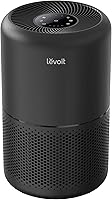
The Levoit Core 300-P has AHAM-verified CADR figures of 143 CFM for smoke, 153 CFM for dust and 167 CFM for pollen. For fragrance questions, see Levoit air purifier essential oil guidance.
Levoit also says its original filter has 99.97% efficiency for 0.1 to 0.3 micron airborne particles, based on independent lab testing.
This is a filter-based option to compare if documented particle performance matters more to you than a water-based design. Check that the purifier's room fit and replacement-filter needs match your space.
How much cleaning does a water tank need?
A water-based device needs routine care because water and wet surfaces can collect residue. Check the cleaning steps before buying, including whether you can reach the tank, base and any narrow areas.
Empty standing water when the unit is not in use, and follow the manufacturer's cleaning schedule. If the tank is awkward to reach or has several parts, regular maintenance may become a burden.
Consider whether the appliance needs a filter or sponge in addition to water. Replacement parts add another task, and neglected wet components can smell or become dirty.
Is a humidifier the same as a water-based air purifier?
A humidifier adds moisture to air; an air purifier is meant to reduce airborne pollutants. Choose based on the job you need done, even when a product's design includes both water and a filter.
A humidifier can make dry air feel more comfortable, but that does not mean it removes dust, pollen or smoke. Our air purifier vs humidifier comparison explains which appliance fits each need.
Its top-fill design and wide tank opening are relevant if easier filling and cleaning are priorities. Choose it for humidification, then use a separate purifier when particle removal is the goal.
A combined product can still require separate checks for both functions. For example, see whether it reports particle-cleaning performance and whether it lets you control humidity without running the air-cleaning feature.
Can an air purifier also humidify a room?
Some products combine air cleaning and humidification, but each function needs its own evidence. Confirm that the model provides meaningful particle filtration as well as controlled moisture output before paying for a combination unit.
Our guide to Blueair air purifier and humidifier features looks at how one brand approaches both jobs. The details vary by model, so check the specific design and care instructions.
When is a filter-based purifier the clearer choice?
A filter-based purifier is easier to compare when you want documented performance for dust, pollen or smoke. Look for a suitable CADR, filter type and room fit, then account for replacement filters and operating noise.
The Levoit Core Mini-P has a pre-filter and main filter, and its listed uses include capturing lint, hair, pet dander, fine airborne pollutants and smoke particles. For another compact purifier, see the Blueair Mini Max review.
It also has sleep mode and an auto-off display.
This smaller filter-based option may suit a bedroom, kitchen or office where compact placement matters. The details don't give a CADR or room coverage figure, so compare its room fit carefully rather than assuming it can serve a large space.
If you're deciding between appliances that manage different moisture problems, read our air purifier vs dehumidifier guide. For a combined option, compare the factors in our air purifier and dehumidifier combo guide.
What are the limits of water-based air cleaning?
Water-based air cleaning may capture some particles, but it should not be treated as a substitute for a purifier with documented fine-particle performance. Its limits depend on airflow, contact with water, filtration stages and how the unit is maintained.
Water can hold particles that reach it, but it cannot show you how much of the room's air was cleaned. A device may also add humidity, which is a separate effect from reducing airborne pollutants.
For smoke, pollen or fine dust, favor a model with relevant independent performance data. If you're comparing broader home appliances, our guides on what to look for in a vacuum cleaner and what to look for in a robot vacuum cleaner cover cleaning equipment for surfaces rather than air.
How do you choose an air purifier with water?
Choose an air purifier with water only if its cleaning method and maintenance fit your needs. Pick a water-based design when you accept its care routine and can verify its performance; pick a rated filter purifier when fine-particle evidence is the priority.
Check room fit and cleaning steps before deciding. If humidity is your main concern, choose a humidifier; if particles are the concern, compare filtration and clean-air data.
Frequently asked questions
Does an air purifier with water remove dust?
A water-based unit may catch some larger particles as air moves through or past the water, but the result depends on its design. It does not automatically provide the fine-particle performance of a rated filter purifier.
Check for clear particle-removal claims and independent performance measures before choosing one for dust.
Is an air washer the same as an air purifier?
An air washer moves air past water to collect some particles, while a filter purifier draws air through filter media. The labels alone don't tell you how much of a pollutant either design removes.
Compare documented particle performance, room coverage and maintenance needs for the exact model.
Can a humidifier clean the air?
A humidifier adds moisture to air, but that does not make it a particle air cleaner. Some units may have a small pre-filter or water treatment feature, yet that is not the same as a rated air-cleaning filter.
Choose a humidifier for humidity and an air purifier for airborne particles.
Do water-based air purifiers need cleaning?
Yes. Water reservoirs and wet parts need regular emptying and cleaning based on the manufacturer's directions.
Stagnant or dirty water can create odor and hygiene problems, so check how easily the tank and contact surfaces can be reached before buying.
Don't leave old water sitting between uses.