What Does a Carbon Filter Do in an Air Purifier?
A carbon filter in an air purifier helps reduce odors and some gases from indoor air by trapping them on activated carbon. It works alongside a particle filter, but it does not replace a HEPA-style filter or remove every pollutant.
On this page (8 sections)
- What does a carbon filter do in an air purifier?
- What can activated carbon reduce?
- What can a carbon filter not remove?
- How is a carbon filter different from a HEPA filter?
- When should you replace a carbon filter?
- Which products help with air-cleaning needs?
- How do you get better results from carbon filtration?
- Is a carbon filter worth having?
A carbon filter in an air purifier helps reduce odors and some gases by trapping them on activated carbon. It is not the same as a particle filter, so the best air purifier for a room often combines carbon with a HEPA-style or other fine-particle filter.
If you're comparing air-cleaning methods, start with what is an air purifier for home to see how filtration, room size, airflow, and maintenance fit together.
What does a carbon filter do in an air purifier?
An activated carbon filter adsorbs odor molecules and some gases onto its porous surface. Adsorption means the molecules stick to the carbon rather than being strained out like dust through a mesh.
Carbon is useful for cooking smells, pet odors, tobacco odors, and some household fumes. Its performance depends on the amount and type of carbon, how air moves through the filter, the pollutant, and how much carbon has already been used.
A carbon layer may be a separate filter or part of a combined filter cartridge. Thin carbon-coated material can help with light everyday odors, while a larger carbon bed generally offers more material for adsorption.
Carbon filtration does not mean that every smell disappears. Strong sources, poor ventilation, and a small carbon layer can limit the result.
What can activated carbon reduce?
Activated carbon is most useful for odors and certain gaseous pollutants. It can help with smells from cooking, pets, smoking, and everyday indoor activity when the purifier has enough carbon and the air passes through it.
The exact result varies by chemical. Some gases are not captured well by ordinary activated carbon, and a home purifier may not be designed to remove every volatile organic compound.
Carbon also becomes less effective as its available surface fills. This is why a purifier can continue moving air while its odor-control performance gradually weakens.
For smoke concerns, particle filtration matters too. Our guide to the best air purifier for smoke explains why smoke control needs more than an odor layer.
Does a carbon filter remove smoke particles?
No, carbon mainly targets odors and gases, while a particle filter targets smoke particles. Smoke contains a mixture of gases and very small particles, so one filter type cannot handle the whole problem equally well.
A purifier with both filtration stages can address more of the smoke mixture. Keep the purifier away from the smoke source when possible, and use ventilation or source control rather than relying on filtration alone.
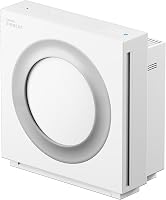
The BLUEAIR Air Purifiers for Small Spaces Bedroom combines HEPASilent particle filtration with an activated carbon filter for light household odors. Its small-room design suits bedrooms, dorm rooms, nurseries, and home offices.
The Mini Max Auto is rated for 105 sq ft at 4.8 air changes per hour and up to 510 sq ft in one hour. Its particle sensor adjusts fan speed in Auto Mode, while Night Mode and operation as low as 19 dB suit sleep and quiet work areas.
Its washable fabric pre-filter can catch larger material before air reaches the main filtration system. Follow the purifier's care instructions and replace the filter when its indicator or instructions call for it.
What can a carbon filter not remove?
A carbon filter does not replace particle filtration, source control, or fresh-air ventilation. It is not a complete solution for dust, pollen, pet dander, mold particles, or smoke particles.
A purifier's particle filter handles those airborne solids. A carbon layer handles some odors and gases.
The two functions can work together, but they should not be confused.
Carbon also does not make an indoor source harmless. If a room has smoke, a strong chemical spill, gas appliance trouble, or another safety concern, leave the area and address the source first.
For a different type of home filter, the Filterbuy 18x24x1 Air Filter MERV 8 Dust & Allergy Defense is a pleated HVAC filter with MERV 8 synthetic media. It is intended for compatible furnaces, air conditioners, heat pumps, and HVAC systems, so it is not a substitute for a portable purifier's carbon cartridge.
Its actual dimensions are 17.38 x 23.38 x 0.75 inches, and the pack has 4 filters. The frame uses beverage board with dual wire backing, and the stated replacement schedule is every 90 days for optimal performance.
Choose this type of filter when your HVAC system needs the correct size and rating. It does not provide the same odor-control role as an activated carbon filter.
How is a carbon filter different from a HEPA filter?
A carbon filter targets odors and some gases, while a HEPA-style filter targets airborne particles. The filters solve different problems, so a combined purifier can be more useful than either layer alone.
A HEPA-style filter can capture very small particles, depending on its design and stated performance. Carbon works through adsorption, and its useful life depends on pollutant exposure and carbon capacity.
For vacuum filtration, what is a HEPA filter in a vacuum explains the particle-filtering role in another type of appliance. The same basic distinction applies: particle filtration and gas or odor control are separate jobs.
A purifier may also have a washable pre-filter. That layer can protect the main filter from larger dust and hair, but washing a pre-filter does not restore exhausted activated carbon.
When should you replace a carbon filter?
Replace the carbon filter when the purifier's instructions say to do so or when odor control becomes noticeably weaker. Do not judge carbon life only by whether the filter looks dusty.
Heavy exposure to tobacco smoke, wildfire smoke, cooking fumes, or strong pet odors can use carbon faster. When it's time to replace a filter, compare air purifier replacement filters.
A filter in a lightly used bedroom may last longer than one in a busy kitchen, but the purifier's replacement guidance should come first.
Keep the air intake and outlet clear. Vacuum or wash only the parts the instructions identify as washable, because moisture or aggressive cleaning can damage a filter that is not designed for it.
Our guide to how to clean a vacuum filter covers filter-care principles for vacuums. Air-purifier filters have their own care instructions, so don't apply a vacuum filter's cleaning method automatically.
Which products help with air-cleaning needs?
Choose the filter type based on the pollutant you want to control. Use activated carbon for odor and some gas reduction, particle filtration for dust and smoke particles, and a compatible HVAC filter for central-air dust control.
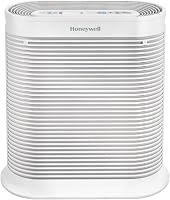
The Honeywell Air Genius 5 Air Purifier is designed for large rooms up to 1,200 sq ft in its title, with a stated recommended cleaning area of 250 sq ft at 4.8 air changes per hour. For compatible carbon prefilters, see Honeywell carbon prefilters.
It reduces dust, pollen, pet dander, odors, and smoke, and uses washable permanent filters plus a washable pre-filter.
It has 5 air-cleaning levels, oscillation, an optional floor accent light, and an auto-off timer from 2 to 12 hours. Its dimensions are 28.9 x 11.5 x 11.5 inches, so measure your available floor space before choosing it.
The washable-filter design can reduce the need to buy replacement filters during the product's lifespan. Compare air purifiers without disposable filters if you want to avoid routine filter purchases.
Cleaning still requires regular attention, and washable particle filtration does not mean that every odor-control material lasts forever.
For a focused comparison, see the best carbon filter air purifiers for smoke, the best air purifiers with activated carbon filters, and the best carbon air purifiers for odors.
How do you get better results from carbon filtration?
Reduce the odor source, place the purifier where air can reach it, and replace exhausted filters on schedule. Carbon filtration works best when the purifier has steady airflow through usable carbon.
Keep doors and windows in mind when deciding what you expect from the purifier. A portable unit can treat the air that passes through it, but it cannot instantly remove an odor from every surface, fabric, or room.
Run the purifier at the setting suited to the room and the problem. Higher airflow can move more air through the filter, while a lower setting may be more comfortable for sleep.
Avoid blocking the intake or outlet with walls, curtains, furniture, or bedding. Check the filter indicator and the manufacturer's cleaning instructions rather than washing a filter that is not marked washable.
Is a carbon filter worth having?
A carbon filter is worth having when odors or some household gases are part of your air-quality concern. It is less useful as a stand-alone answer to dust, pollen, or smoke particles, which need particle filtration.
Pick a compact combined purifier for a bedroom or office with light odors. Choose a larger purifier when the room and airflow needs are greater, and choose a correctly sized HVAC filter when central-air dust filtration is the goal.
The key rule is simple: carbon handles some gases and odors, particle filters handle airborne solids, and source control remains essential. Understanding what a carbon filter does in an air purifier helps you choose the right combination instead of expecting one filter to solve every indoor-air problem.
Frequently asked questions
What does a carbon filter do in an air purifier?
A carbon filter helps reduce odors and some gaseous pollutants by adsorbing them onto activated carbon. It is mainly for smells and certain gases, while a particle filter handles dust, pollen, smoke particles, and other airborne particles.
Results depend on the carbon amount, airflow, pollutant, and filter condition.
Does a carbon filter remove dust?
No. A carbon filter is designed mainly for odors and some gases, not ordinary dust removal.
Dust is handled by a particle filter, such as a HEPA-style filter or another fine-particle filter.
An air purifier may combine both filter types so each layer handles a different part of indoor air cleaning.
How often should you replace an activated carbon filter?
Replace an activated carbon filter according to the purifier's instructions or when odor control becomes weaker. Heavy smoke, cooking odors, pets, and poor ventilation can use up the carbon sooner.
A filter can still look clean while its adsorption capacity has declined, so appearance alone is not a reliable test.
Can a carbon filter remove smoke?
A carbon filter can help reduce some smoke odors and gases, but it does not handle every part of smoke by itself. Particle filtration is needed for smoke particles, and ventilation remains important.
For wildfire or tobacco smoke, choose a purifier with both strong particle filtration and enough activated carbon for the room.