
What Is the Best Vacuum for a Home with Both Cats and Dogs?

The best vacuum for a home with both cats and dogs is one that offers powerful suction and includes specialized pet hair attachments. You need a machine built to handle fur, dander, and the occasional mess that comes with our furry friends. Look for vacuums with a strong filtration system to trap allergens and keep your air clean.
Finding the right vacuum can feel overwhelming. It’s not just about picking any model off the shelf. You’ll want to consider features that specifically target pet-related cleaning challenges. Many models are designed with pet owners in mind, offering unique solutions for shedding seasons and muddy paw prints. We’ve researched models that perform exceptionally well in homes with multiple pets.
- Look for strong suction and good filtration.
- Specialized pet hair attachments are a must.
- Consider models designed specifically for pet owners.
- Ease of maintenance and emptying the dustbin matters.
- Durability for frequent use is important.
Let’s dive into what makes a vacuum a true champion for homes shared with cats and dogs.
Choosing the Right Vacuum for Furry Friends
So, you’re living the dream: a house filled with the joyful chaos of cats and dogs! It’s wonderful, but it also means dealing with a constant flow of fur, dander, and the occasional tracked-in dirt. Finding a vacuum that can keep up is key to a clean and healthy home. You need a machine that’s more than just a household appliance; it’s your partner in pet-parenting peace.
We’ve looked into what makes a vacuum truly excel in a multi-pet household. It comes down to a few core features designed to tackle the unique challenges pets bring. Let’s break down what you should be looking for.
Key Features for Pet Hair Domination
When you have both cats and dogs, you’re dealing with different types of fur and varying shedding patterns. Your vacuum needs to be a versatile warrior.
Suction Power: The Undisputed Champion
The first and most critical factor is powerful suction. Think of it as the vacuum’s muscle. Without enough oomph, pet hair will simply cling to your carpets and upholstery, no matter how many times you pass over it. You need a vacuum that can pull that embedded fur right out of the fibers.
We found that vacuums with high air watts (AW) or strong CFM (cubic feet per minute) ratings generally offer better suction. This is especially important for medium to long-haired pets, as their fur tends to burrow deeper into carpets.
Filtration System: Breathe Easier
Pet dander is a major allergen for many people. If your vacuum doesn’t have a good filtration system, it might just be blowing those tiny allergen particles right back into the air. This defeats the purpose of cleaning and can make allergy symptoms worse.
Look for vacuums with HEPA filters. HEPA stands for High-Efficiency Particulate Air. A true HEPA filter can trap at least 99.97% of particles that are 0.3 microns in size. This includes pet dander, pollen, and dust mites. Many models designed for pet owners include advanced multi-stage filtration systems.
According to the EPA, HEPA filters are highly effective at removing common allergens from indoor air.
Brush Roll Design: Untangling the Fur Ball
The brush roll, or beater bar, is what agitates your carpet fibers to loosen dirt and hair. For pet homes, an anti-tangle brush roll is a game-changer. Pet hair, especially long strands, can easily wrap around traditional brush rolls, reducing their effectiveness and requiring frequent manual untangling.
Some vacuums have brush rolls designed with special bristle patterns or self-cleaning mechanisms to prevent hair from winding up. If a vacuum doesn’t have an explicitly anti-tangle feature, look for brush rolls with stiffer bristles that can agitate carpets well without easily trapping long hairs.
Specialized Pet Attachments: The Secret Weapons
Beyond the main cleaning head, pet-specific attachments are incredibly useful. These are your tools for tackling furniture, stairs, and those hard-to-reach spots where fur loves to gather.
- Upholstery Tool: Essential for cleaning pet hair off couches, chairs, and pet beds. Some come with rubberized edges to help grab hair.
- Crevice Tool: Perfect for getting into tight corners, along baseboards, and between sofa cushions.
- Mini Motorized Brush: This small, powered brush attachment is a mini-miracle for stairs and car interiors. It works wonders on embedded pet hair. A mini miracle for stairs and car interiors is the mini motorized brush attachment.
We found that vacuums that include a robust set of these tools often perform better in the overall battle against pet hair and dander.
Types of Vacuums and Their Pet-Friendly Pros and Cons
Not all vacuums are created equal when it comes to handling pet messes. Each type has its own strengths and weaknesses.
Upright Vacuums
Uprights are classic for a reason. They offer strong suction and often have wide cleaning paths, making them great for large carpeted areas. Many come with excellent onboard tool storage.
Pros for Pet Owners
Many upright models boast powerful motors and specialized brush rolls designed for carpets. Their larger dustbins can also be a plus for homes with heavy shedders.
Cons for Pet Owners
They can be heavy and less maneuverable, making them challenging for cleaning stairs or under low furniture. Some models can be noisy, which might stress out sensitive pets.
Canister Vacuums
Canister vacuums separate the motor and dustbin from the cleaning head, connected by a hose. This design offers excellent maneuverability and versatility.
Pros for Pet Owners
The lighter wand and hose make them easier to use on upholstery, stairs, and in tight spaces. You can often find models with excellent suction and advanced filtration.
Cons for Pet Owners
They can be a bit more cumbersome to store, and some people find the setup less convenient than an upright. The hose can sometimes get tangled around furniture or pets.
Cordless Stick Vacuums
Cordless sticks have exploded in popularity due to their convenience. They are lightweight and always ready to go for quick cleanups.
Pros for Pet Owners
Their lightweight nature makes them perfect for daily spot cleaning of fur tumbleweeds or small messes. Many newer models offer impressive suction and good battery life.
Cons for Pet Owners
Battery life can be a concern for larger homes or deep cleaning sessions. While many are powerful, some may not have the raw suction needed for deeply embedded pet hair in thick carpets compared to corded models.
Robot Vacuums
These autonomous cleaners are designed to clean your floors on a schedule. They’re great for maintaining cleanliness between deeper cleans.
Pros for Pet Owners
They can run daily, significantly reducing the amount of fur and dander that accumulates. Many models have smart mapping and can navigate around obstacles.
Cons for Pet Owners
Robot vacuums typically have less suction power than traditional vacuums. They can struggle with deeply embedded dirt or larger debris. They also can’t clean stairs or upholstery. Some may get tangled in cords or the occasional pet toy.
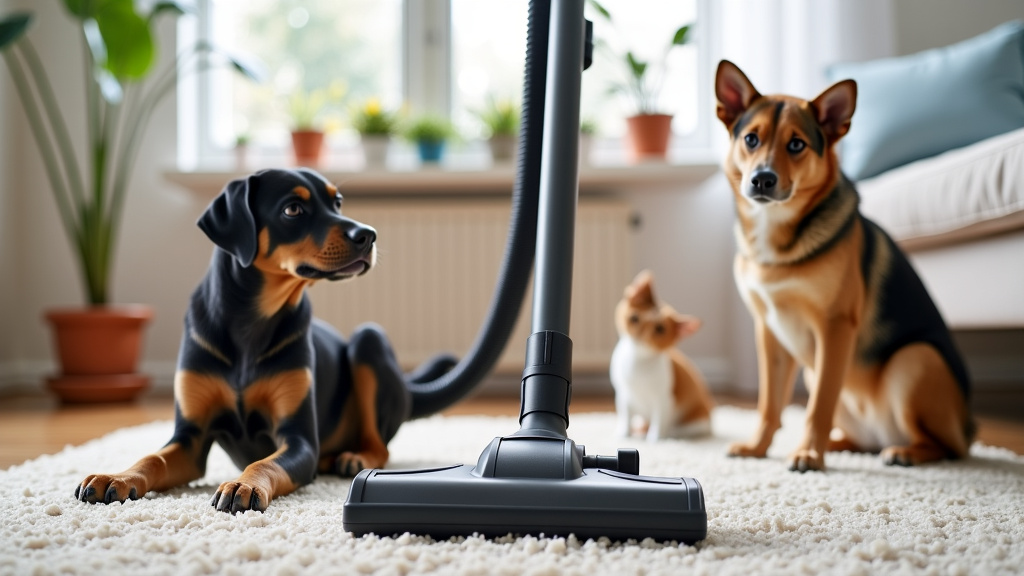
Maintenance and Ease of Use: Keeping Your Vacuum Running Smoothly
A vacuum is only as good as its maintenance. For pet owners, this is especially true.
Emptying the Dustbin
Pet hair can fill up a dustbin quickly. You want a vacuum that’s easy to empty, preferably with a one-touch system. If you have allergies, a bagless model with a well-sealed bin is usually preferred. However, some people with severe allergies might prefer bagged vacuums, as they contain the dust and allergens more effectively when disposing of the bag.
We found that models with larger dustbins require less frequent emptying, which is a real time-saver for busy pet parents.
Cleaning the Brush Roll and Filters
Regularly cleaning your vacuum’s brush roll and filters is essential for maintaining optimal performance. Many modern vacuums have washable filters, which can save you money on replacements. Just remember to let them dry completely before reinserting them!
Checking the brush roll for tangled hair and debris weekly can prevent motor strain and keep your vacuum running efficiently. Some brush rolls are designed for easy removal and cleaning.
Making Your Choice: A Checklist for Pet-Friendly Vacuums
Ready to make a decision? Use this quick checklist to guide your selection:
- Does it have powerful suction for carpets and hard floors?
- Is the filtration system effective (ideally HEPA)?
- Does it feature an anti-tangle brush roll or a way to easily clean it?
- Are there useful pet-specific attachments included?
- Is the dustbin easy to empty, and is it a suitable size?
- Is it easy to maneuver for your home’s layout?
By focusing on these key aspects, you’ll be well on your way to finding a vacuum that makes living with your beloved cats and dogs a much cleaner and more comfortable experience for everyone.
Conclusion
You’ve learned that the best vacuum for a home with cats and dogs combines strong suction with smart features. Look for a vacuum with excellent filtration, like a HEPA filter, to combat dander. Specialized pet hair attachments and an easy-to-maintain brush roll are also vital for tackling fur effectively. By considering these points, you can find a machine that makes maintaining a clean home with your furry family members much easier. Take the checklist we provided and start your search for the perfect cleaning companion today!
Frequently Asked Questions
How often should I vacuum if I have cats and dogs?
For most homes with pets, vacuuming at least two to three times a week is recommended to manage fur and dander. If you have pets that shed heavily or family members with allergies, daily vacuuming might be necessary.
Are robot vacuums good for homes with multiple pets?
Robot vacuums are excellent for daily maintenance and keeping up with light shedding between deeper cleans. While they help reduce overall fur buildup, they generally lack the deep suction power of traditional vacuums for heavily soiled carpets or embedded hair.
Can a vacuum clean pet odors effectively?
While vacuums primarily remove dirt and hair, some models offer features that help with odors. Look for vacuums with charcoal filters or those that can use odor-neutralizing solutions or bags to trap smells.
What should I do if my vacuum’s brush roll is constantly getting tangled with pet hair?
If your brush roll is frequently tangling, ensure you’re vacuuming up long pet hairs regularly. Consider a vacuum with an anti-tangle brush roll or one designed for easy brush roll removal and cleaning. You may also need to manually remove hair from the brush roll more often.
Is a bagged or bagless vacuum better for pet allergies?
Both can work, but bagged vacuums often offer better containment of allergens when emptying. If you choose bagless, ensure it has a well-sealed dustbin and an effective filtration system like HEPA to prevent allergens from escaping back into the air.
